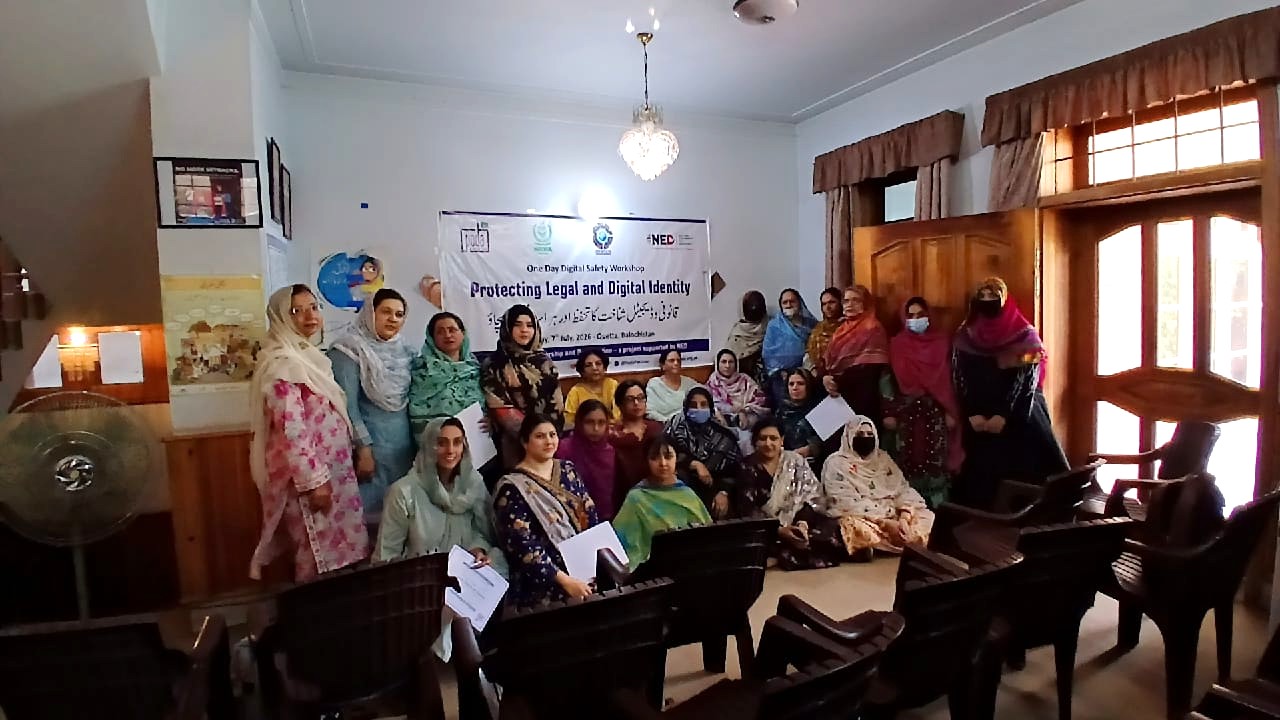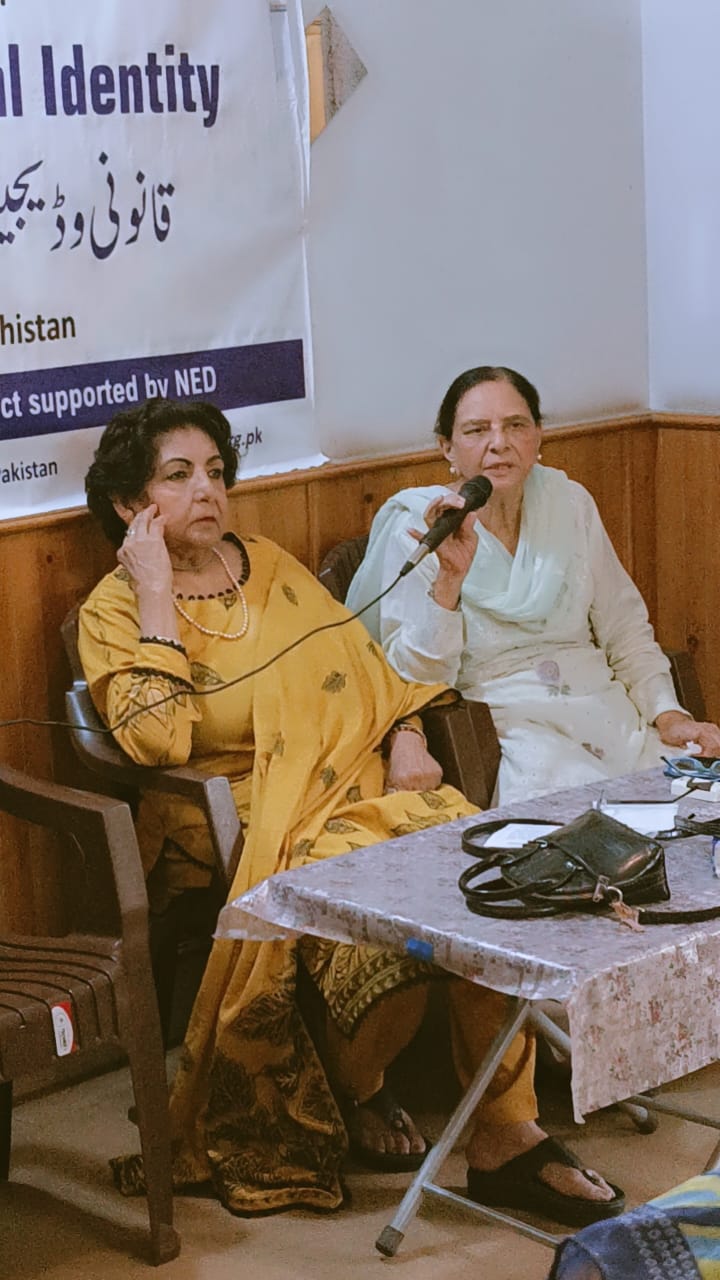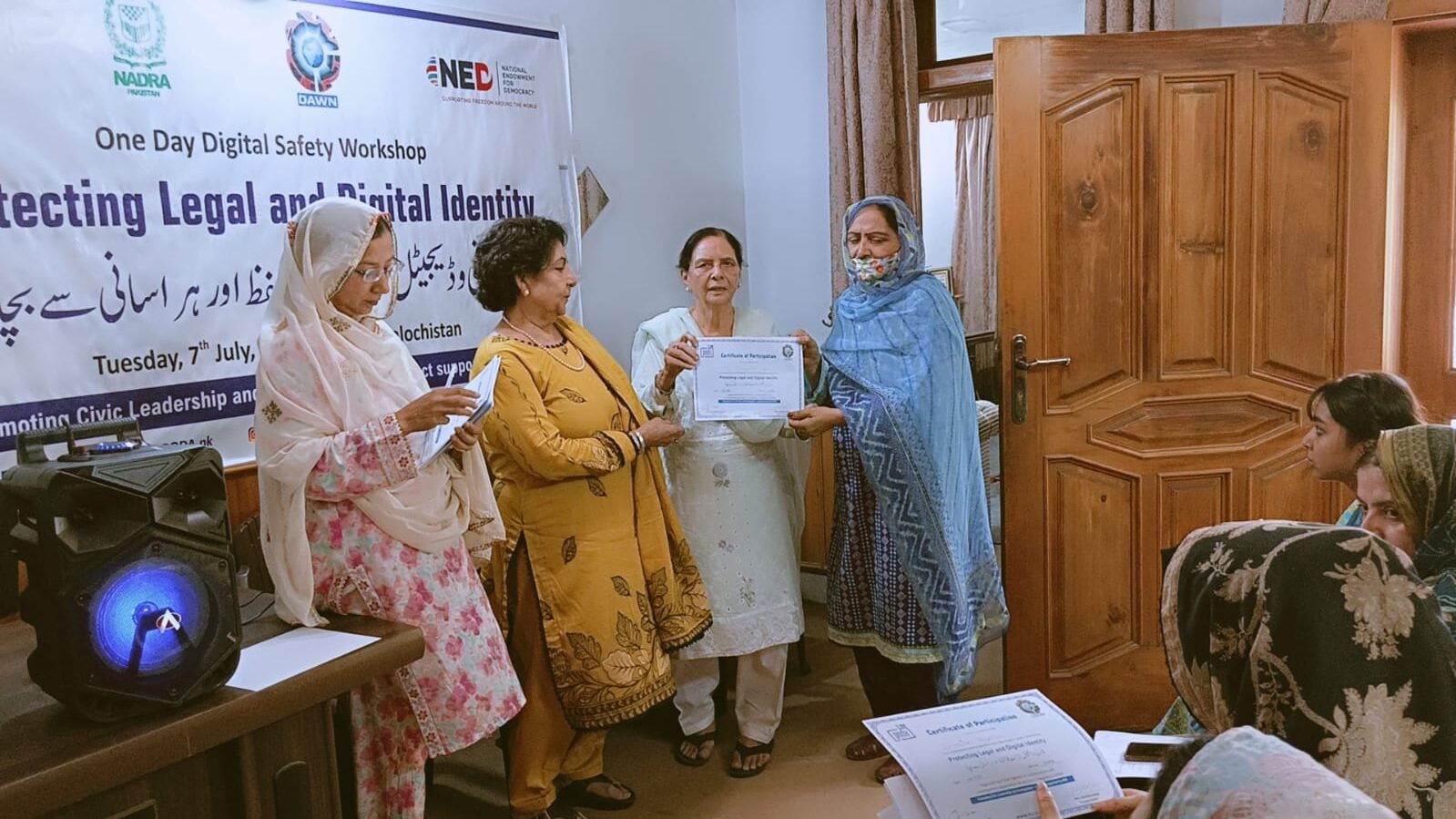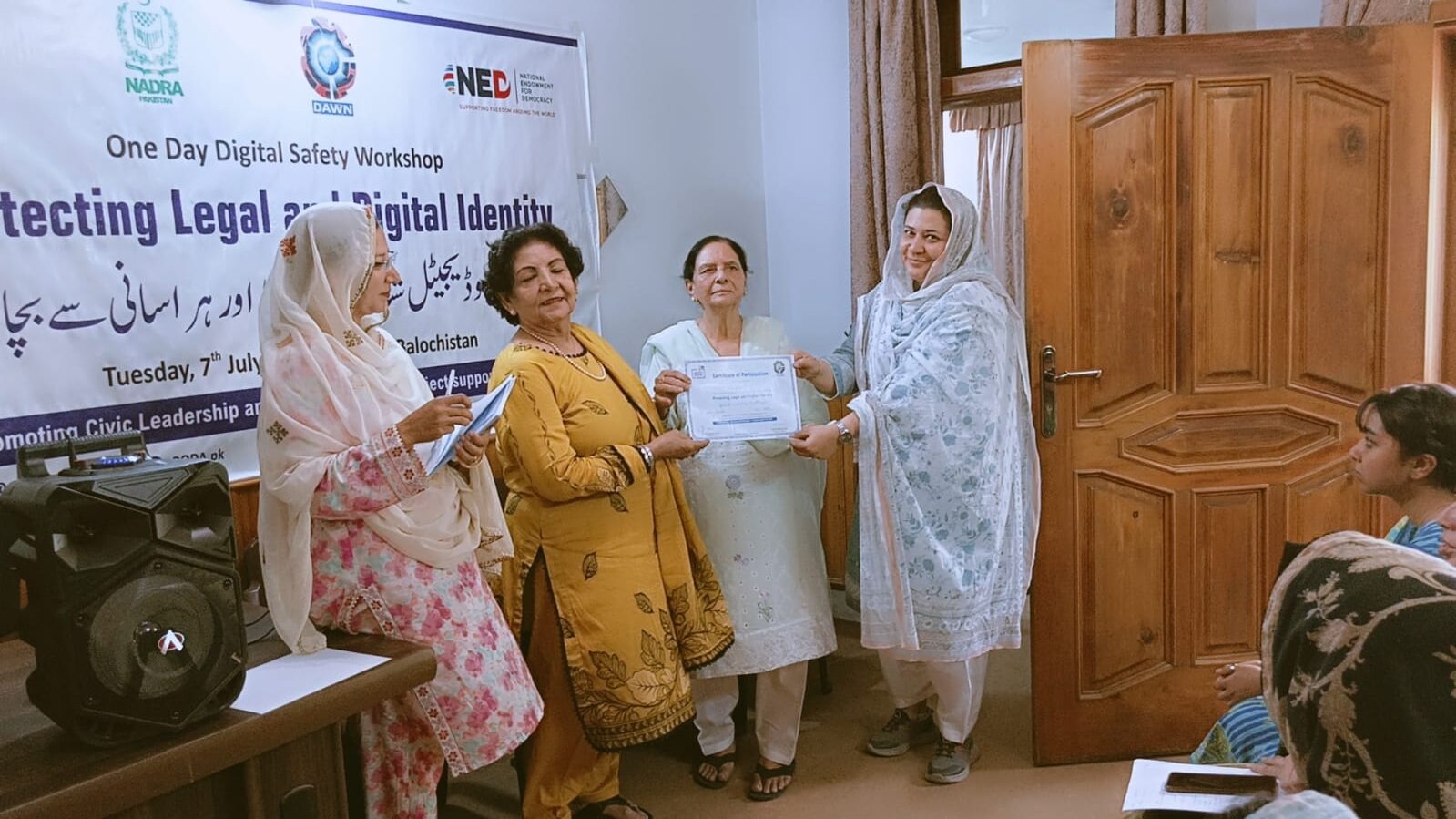
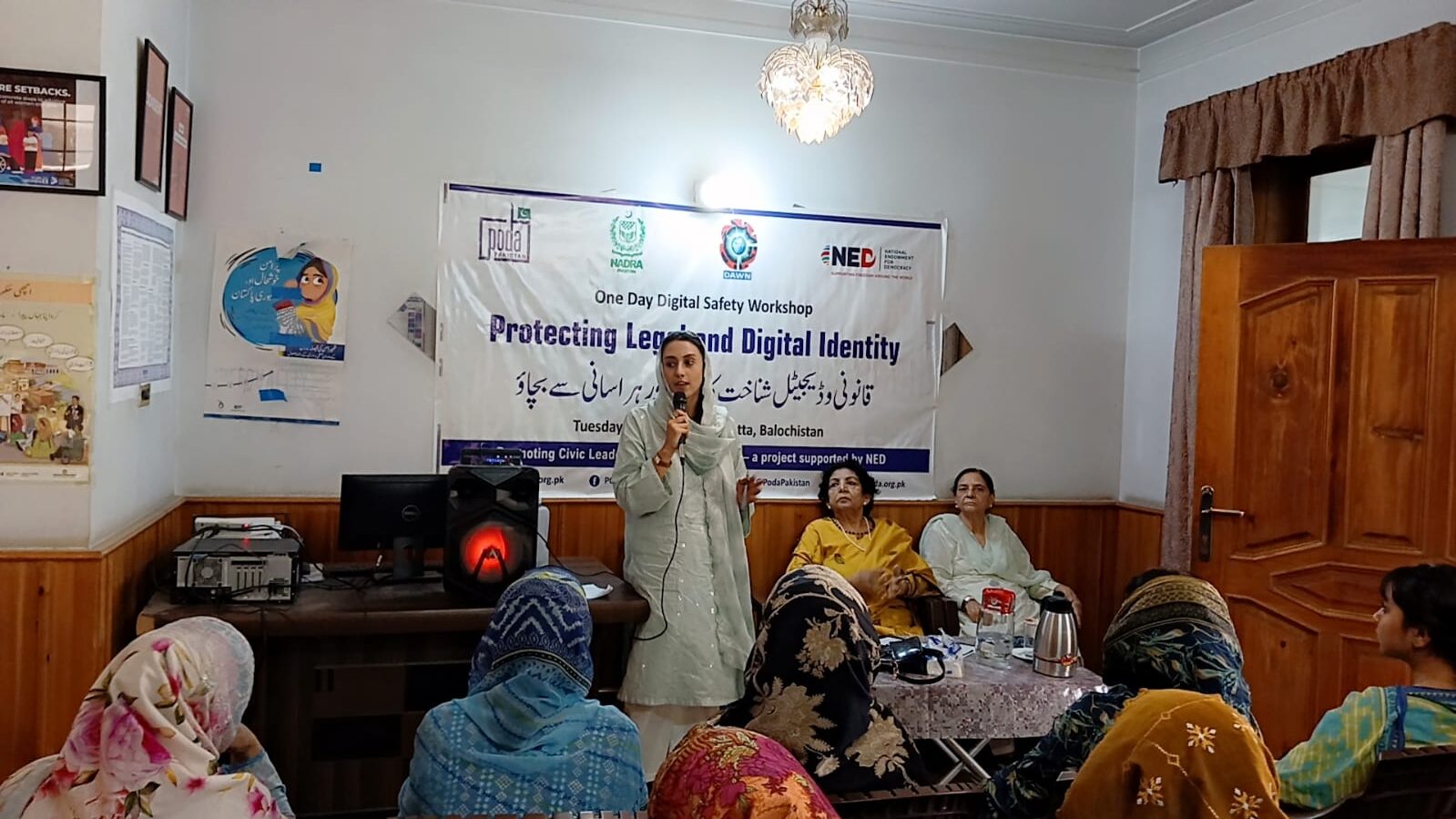
On 23 July 2026, PODA–Pakistan, in collaboration with the National Commission for Human Rights (NCHR), the Development Association for Women in Neglect (DAWN), Quetta, and with the support of the National Database and Registration Authority (NADRA), Regional Office, organized a one-day Digital Safety Workshop in Quetta. The workshop focused on strengthening awareness regarding digital identities, online safety, and responsible use of digital technologies, with particular emphasis on challenges faced by women, including identity theft, cyber harassment, misuse of personal information, and online fraud. Mrs. Shahida Arshad, Executive Director of DAWN, welcomed the participants and highlighted that while digital technology has created opportunities for easier access to services and communication, it has also introduced new risks, especially for women due to limited awareness of safe online practices. She emphasized that protecting digital identity is a shared responsibility of citizens and institutions and guided participants on practical safety measures, including creating strong passwords, maintaining privacy settings, avoiding suspicious links, and reporting cyber abuse. The workshop was part of the project “Promoting Civic Leadership and Participation” supported by the National Endowment for Democracy (NED).
Ms. Farkhanda Aurangzeb, Strategic Advisor, NCHR, shared her experience of dealing with cyber-related complaints and highlighted emerging forms of online exploitation, including “honey trapping,” where individuals build trust through online communication and later use personal information for threats, blackmail, or extortion. She stressed the importance of caution while interacting with unknown individuals online and encouraged participants, particularly young people, to recognize digital risks and seek legal support when needed. Representatives of NCHR, including Ms. Neelam Aziz, provided detailed information on digital identity protection, explaining that personal information such as names, photographs, phone numbers, CNIC details, and online profiles forms part of an individual’s digital identity. She guided participants on using privacy settings, Two-Factor Authentication, secure passwords, avoiding sharing OTPs, preserving evidence of online harassment, and accessing legal remedies under the Prevention of Electronic Crimes Act (PECA) through relevant complaint mechanisms.
Ms. Nargis Gul Kakar, Registration Officer, NADRA, briefed participants about NADRA’s role as Pakistan’s national identity management authority and explained its services related to secure digital identity, including CNIC issuance, family registration, biometric verification, NICOP, and other identity documents. She introduced the Pak-ID mobile application and demonstrated how citizens can access and manage digital identity services online. She also highlighted NADRA’s initiatives to facilitate women, including women-managed registration centres, dedicated women counters and help desks, and free first-time CNIC registration for eligible women. The workshop concluded with an interactive discussion where participants shared experiences related to digital threats and appreciated the practical guidance provided by PODA, NCHR, and NADRA representatives on protecting digital identities, accessing support mechanisms, and promoting safer digital practices.