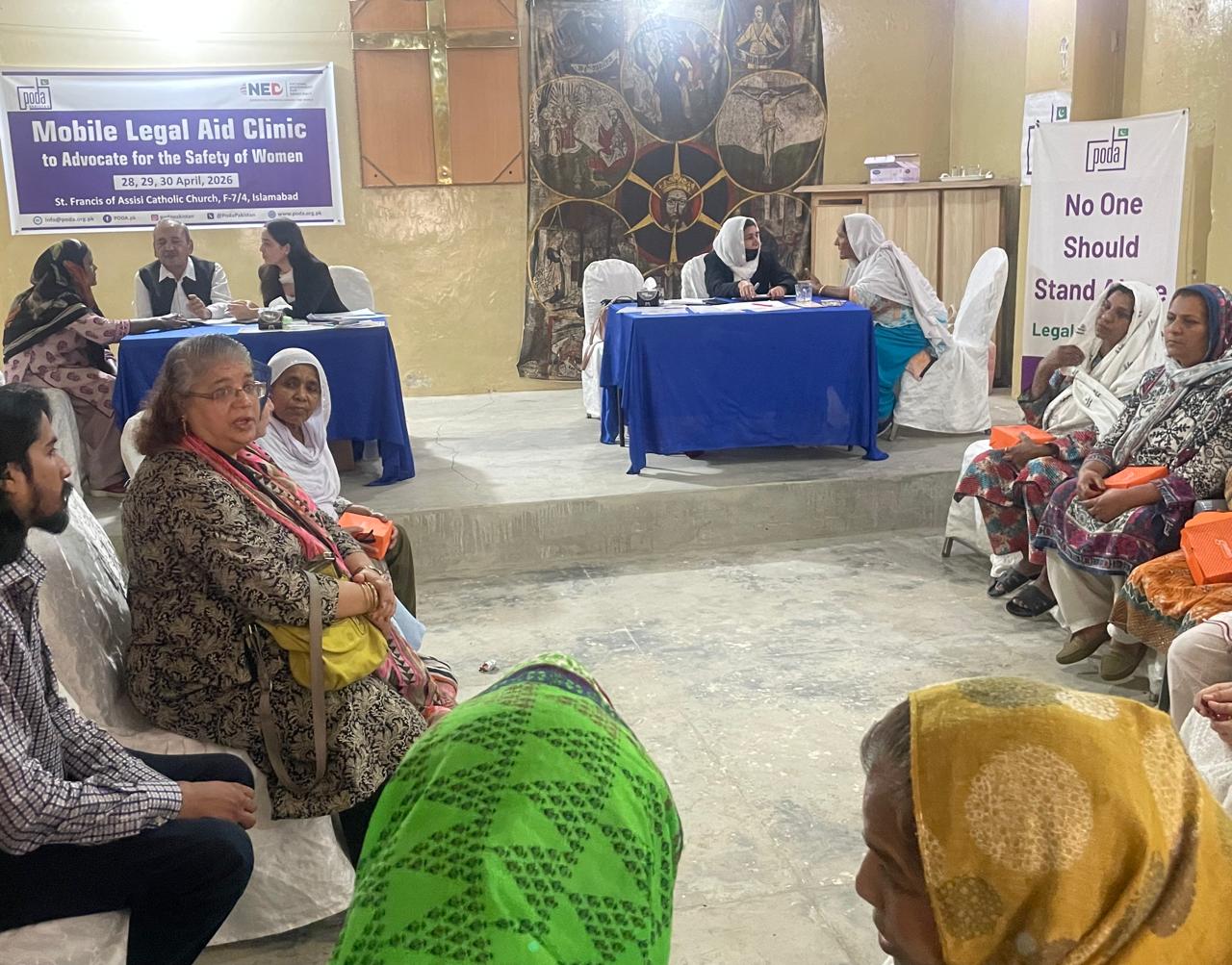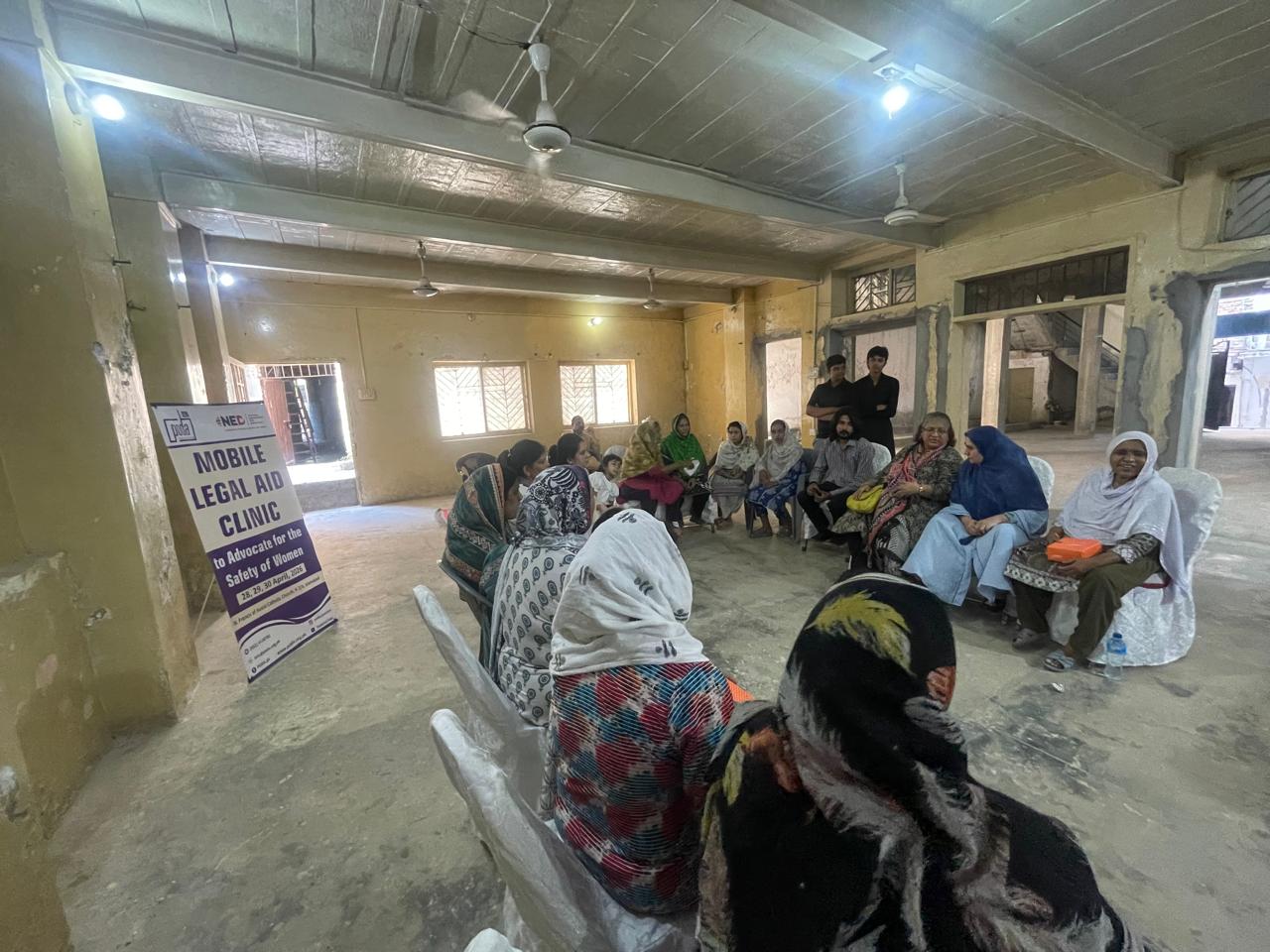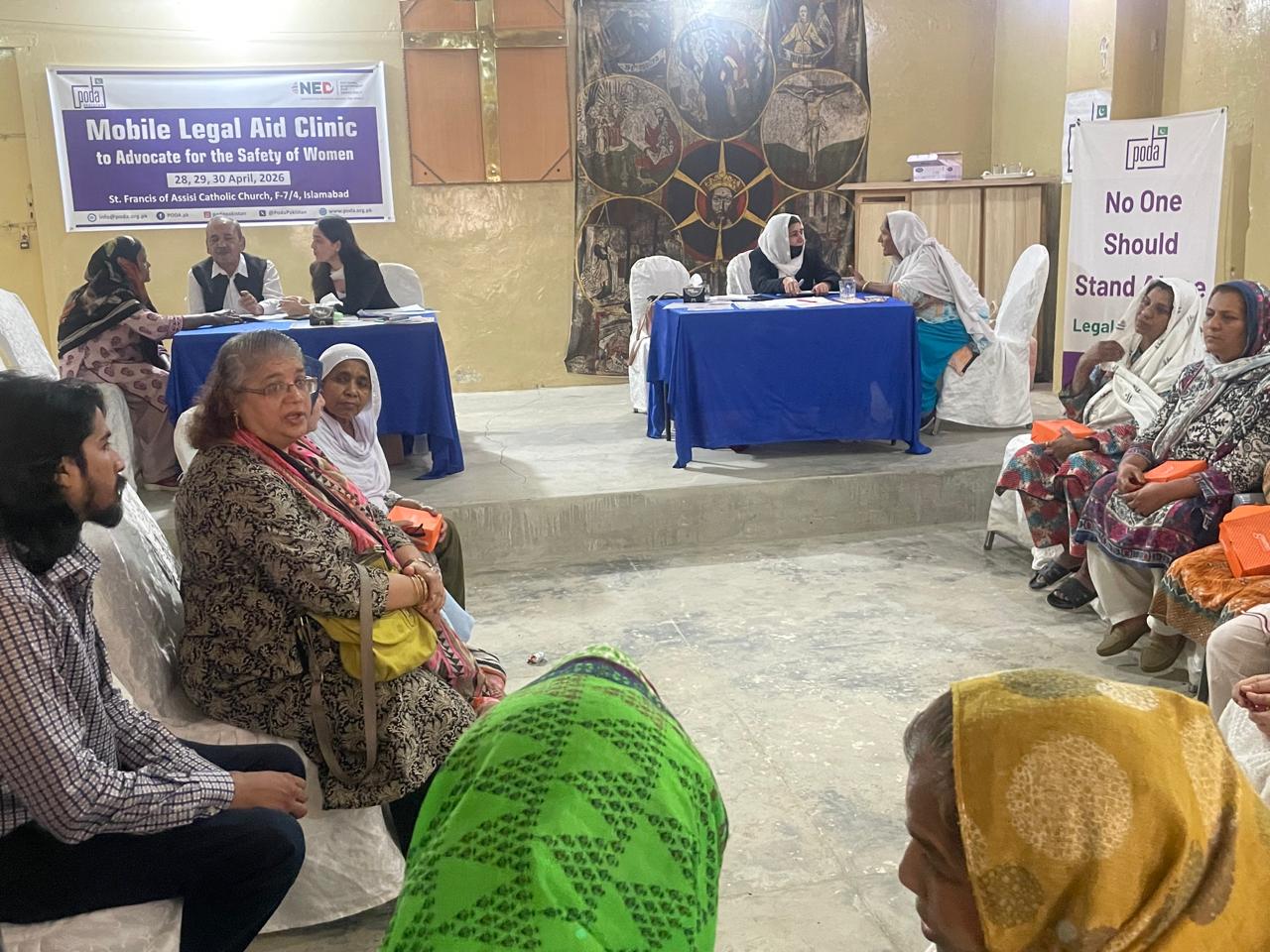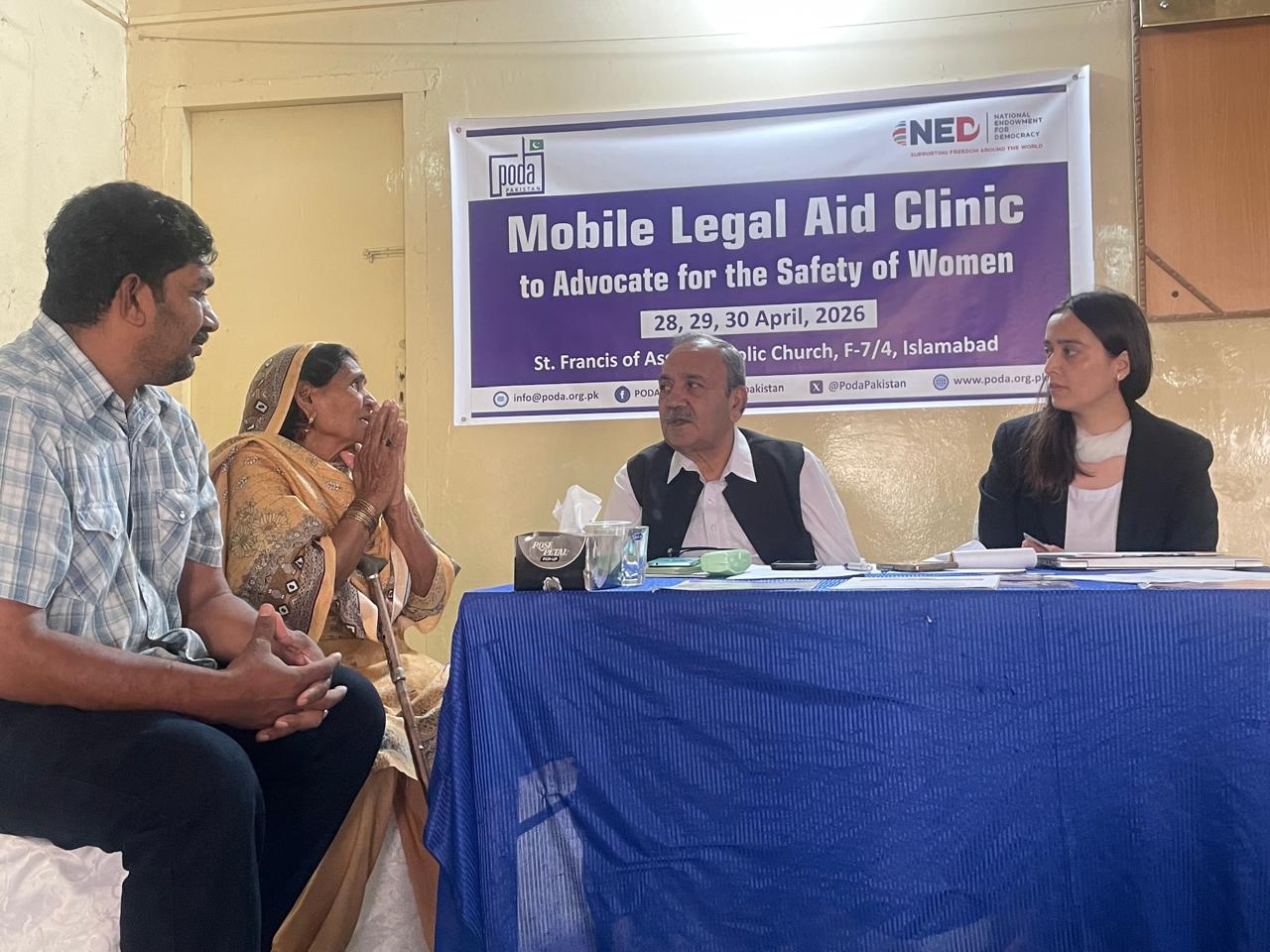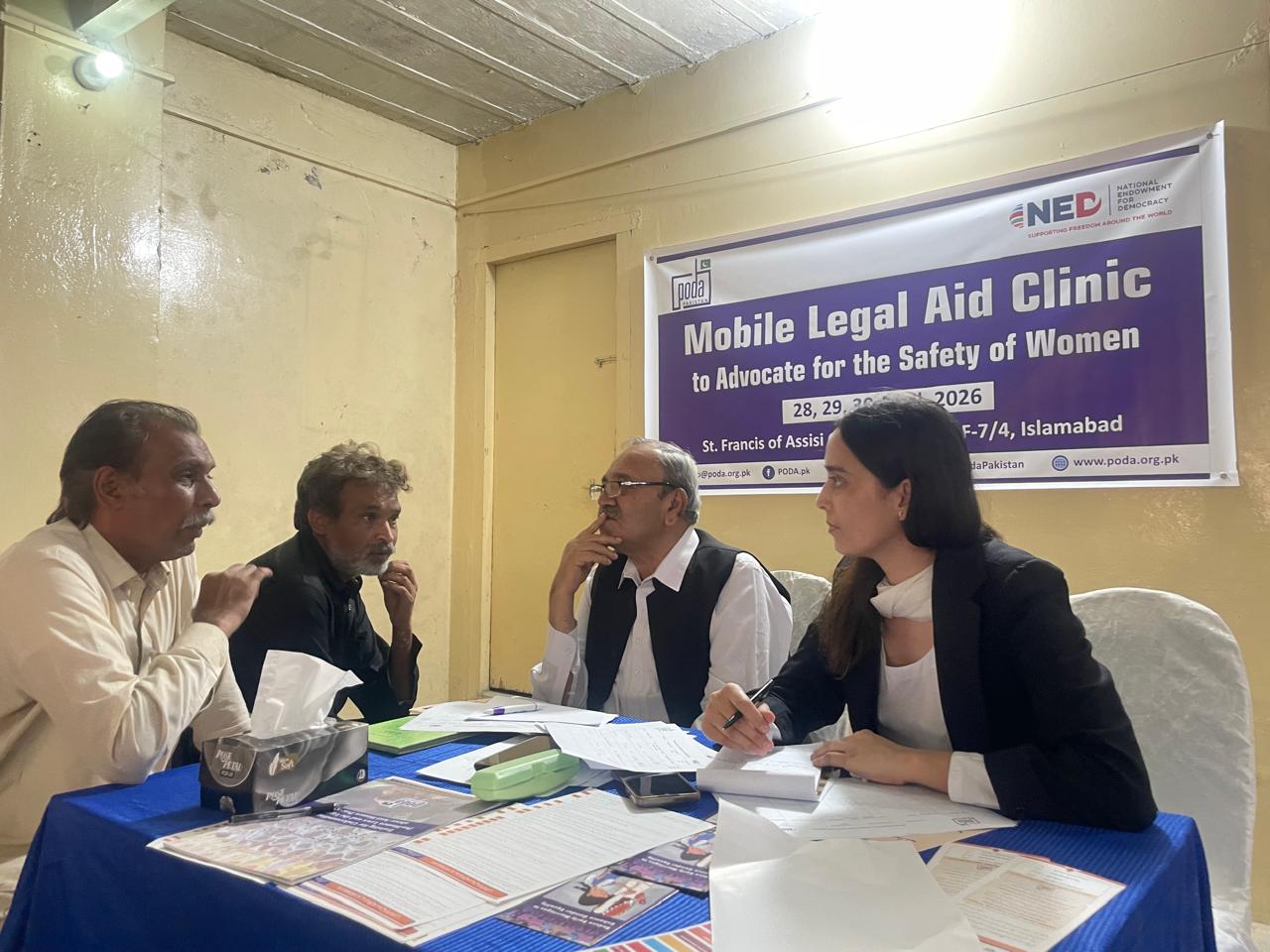
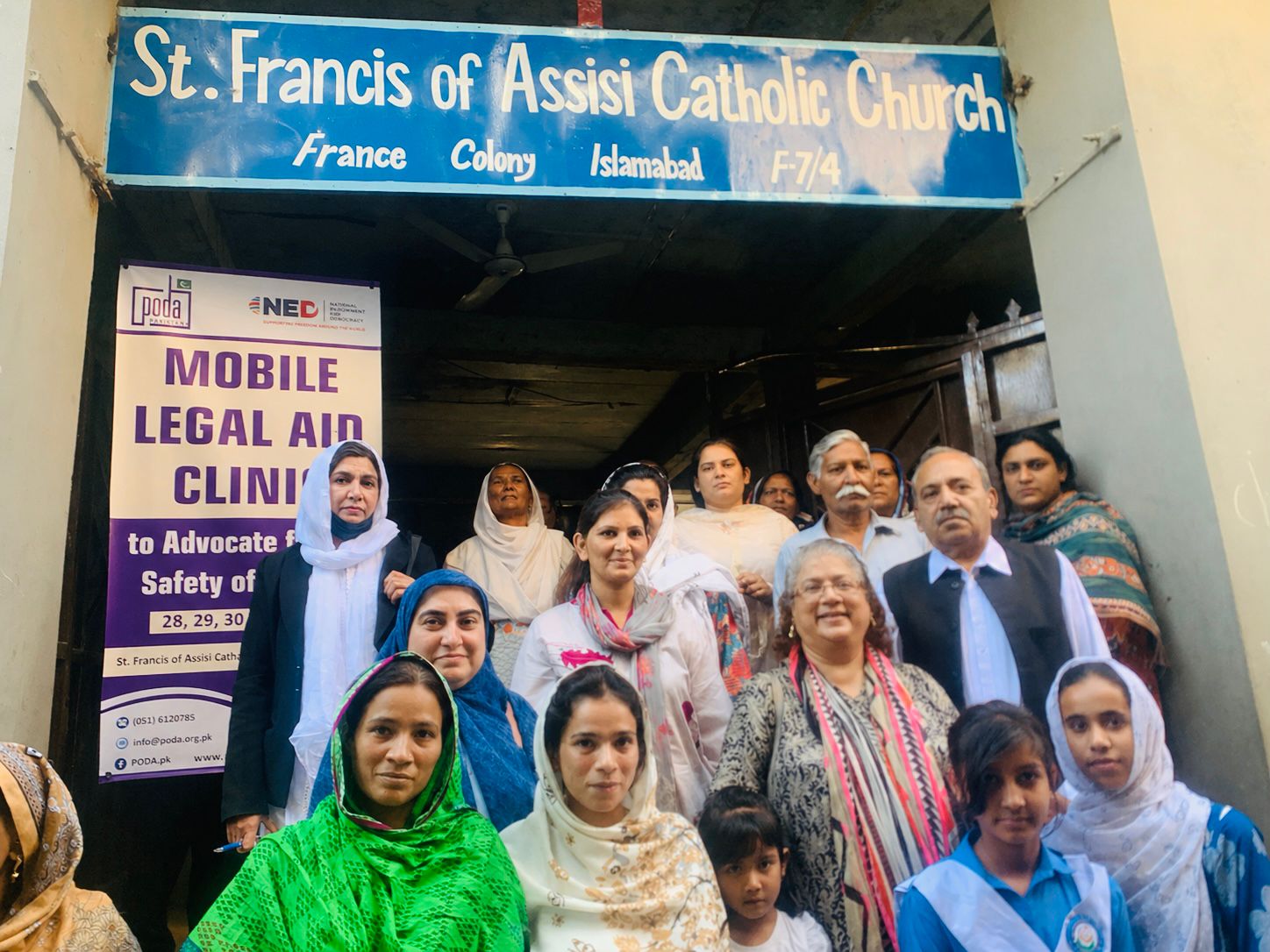
Islamabad, April 29, 2026 — The Potohar Organization for Development Advocacy (PODA), with the support of the National Endowment for Democracy (NED), successfully continued the second day of its three-day Mobile Legal Aid Clinic at St. Francis Catholic Church, F-7/4, Islamabad. The initiative is aimed at providing free legal aid, assistance, and counseling to vulnerable communities, particularly women and members of the Christian community. The Mobile Legal Aid Clinic brings together a team of experienced legal experts, including Ms. Farah Naz Awan Advocate (Former Attorney General for Pakistan), Mr. Khawaja Zahid Nasim (Legal Advisor, PODA), and Ms. Aiman Zahra (Law Officer, PODA). The team is offering legal guidance on a range of issues, with a special focus on the recent amendment to the Christian Marriage Act (Amendment) 2025, which sets the minimum marriageable age for both parties at 18 years, compared to the previous legal age of 13 years for girls and 16 years for boys. The PODA team also distributed informative brochures on the Christian Marriage (Amendment) Act 2025 among attendees. On the second day, approximately 70 individuals, mostly women, visited the clinic seeking legal advice and support. The legal team actively engaged participants, provided guidance, and referred cases to relevant government institutions for follow-up. Pastor Yousaf Masih emphasized that under the recent marriage ICT Christian law, no marriage should be solemnized unless both the bride and groom are at least 18 years of age in Islamabad, and that all marriages must be properly registered to avoid future legal identity issues for children.
Mr. Khawaja Zahid Nasim conducted an informative awareness session on fundamental rights guaranteed under the Constitution of Pakistan, explaining complaint mechanisms and highlighting recent legislative developments. During the clinic, participants from the nearby Christian colony slum (Kachi Abadi) raised serious concerns regarding lack of basic facilities such as clean drinking water, sanitation, healthcare, and infrastructure, along with increasing drug addiction among adults. Residents also expressed fears of forced evictions without assurance of alternative accommodation. A significant number of participants highlighted issues related to non-registration of marriages, leading to difficulties in obtaining legal identity documents, inheritance rights, and access to social services. Legal experts stressed that marriage registration is a fundamental right and guided the community on proper procedures under relevant laws, while also emphasizing the responsibility of authorities to ensure effective implementation and access without discrimination. Ms. Sameena Nazir, Executive Director PODA, reaffirmed the organization’s commitment to providing legal awareness and services to marginalized and rural women, noting that despite limited resources, PODA continues to expand such initiatives nationwide. Participants appreciated PODA’s efforts, recognizing the importance of bringing legal services directly to underserved communities and bridging the gap in access to justice. PODA remains committed to empowering marginalized communities through legal awareness, advocacy, and accessible legal support services.