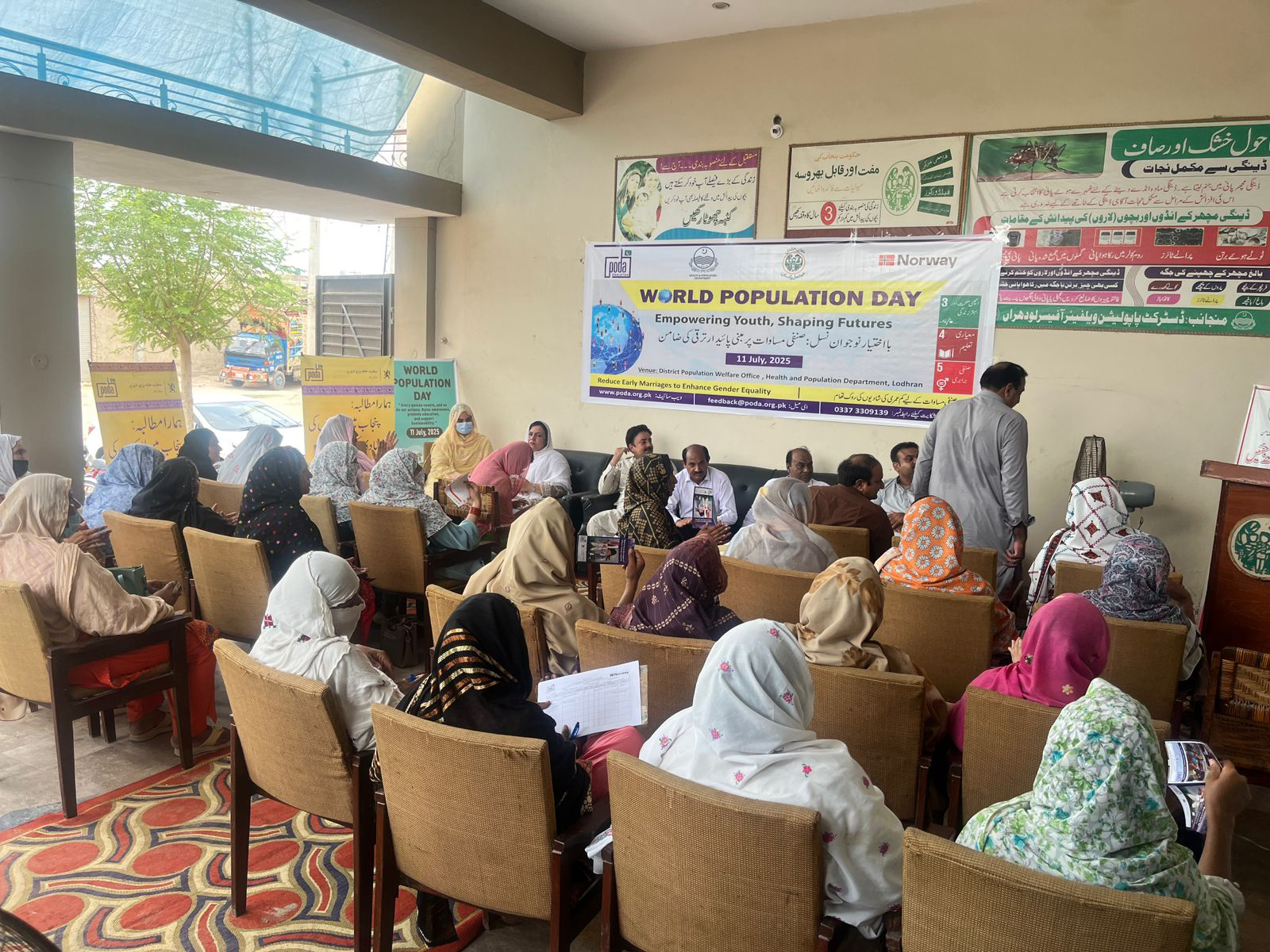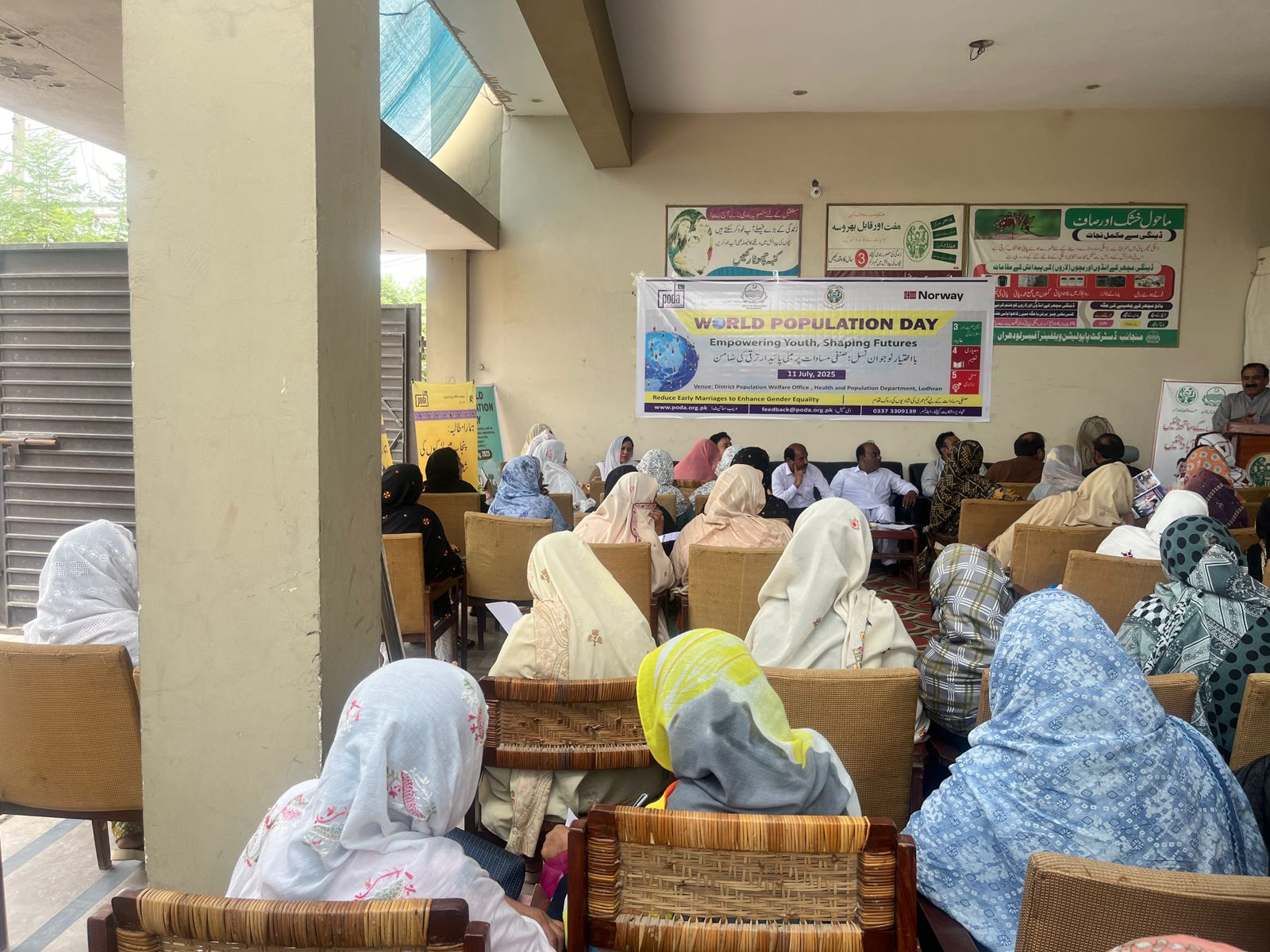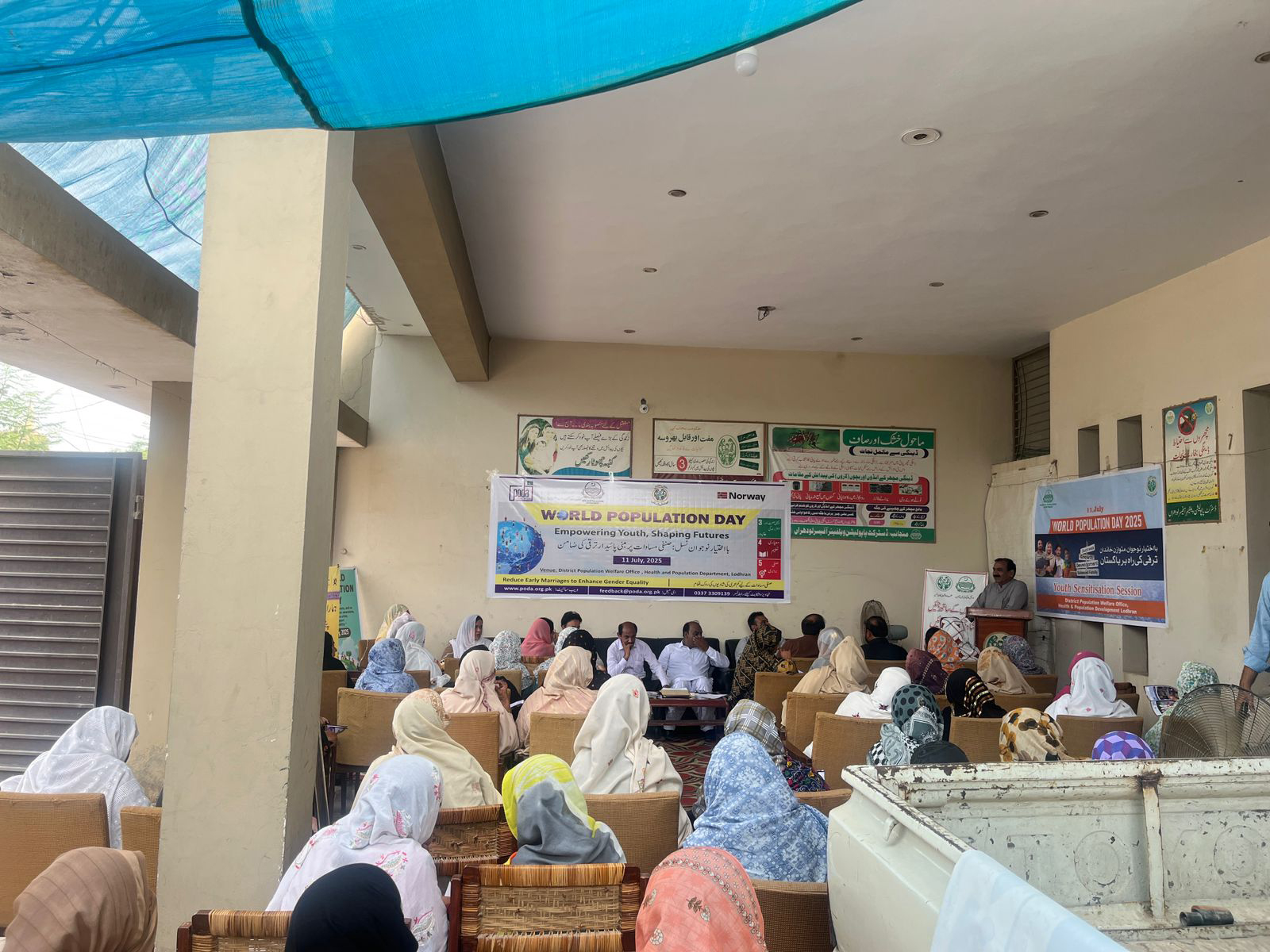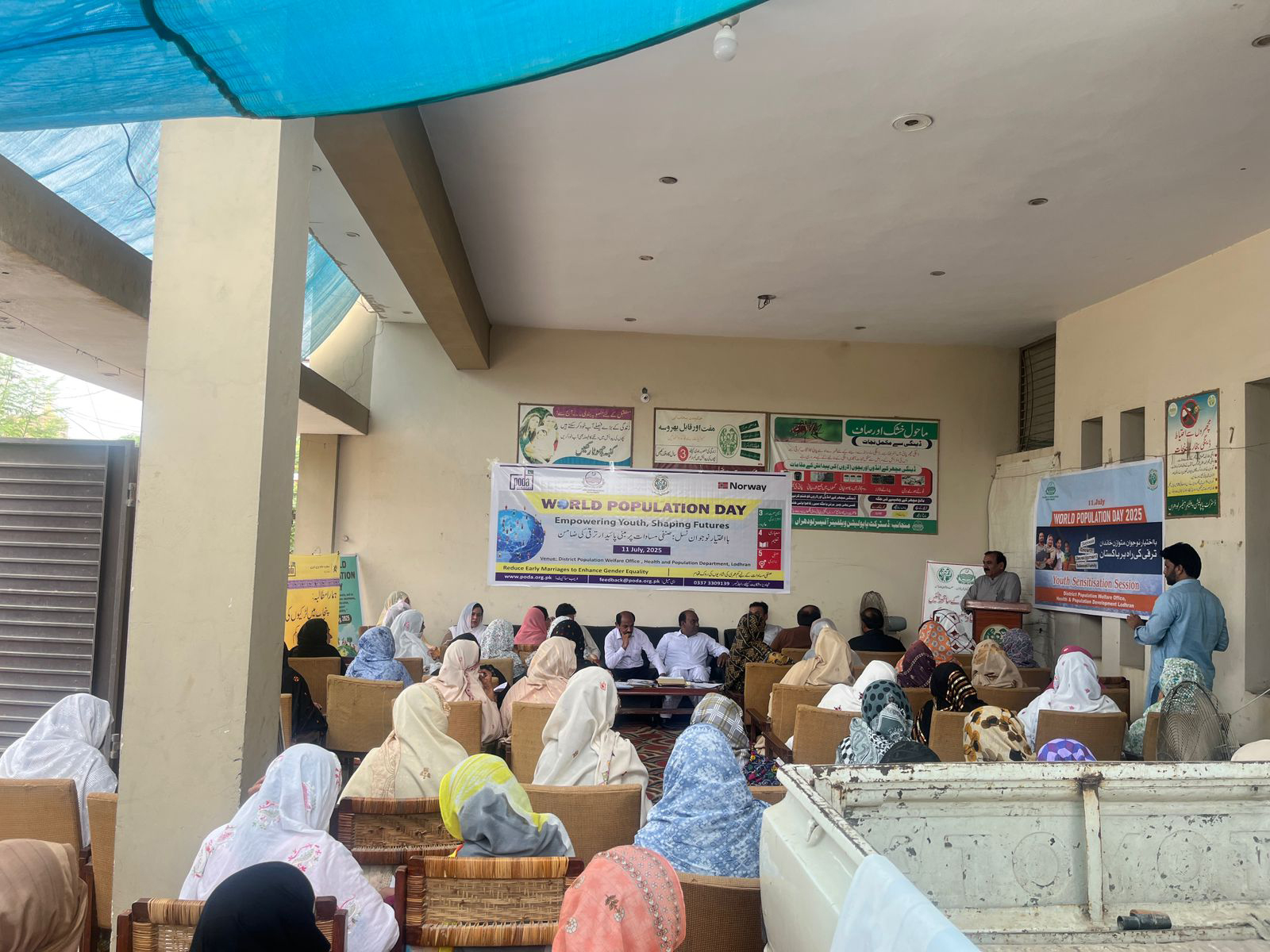
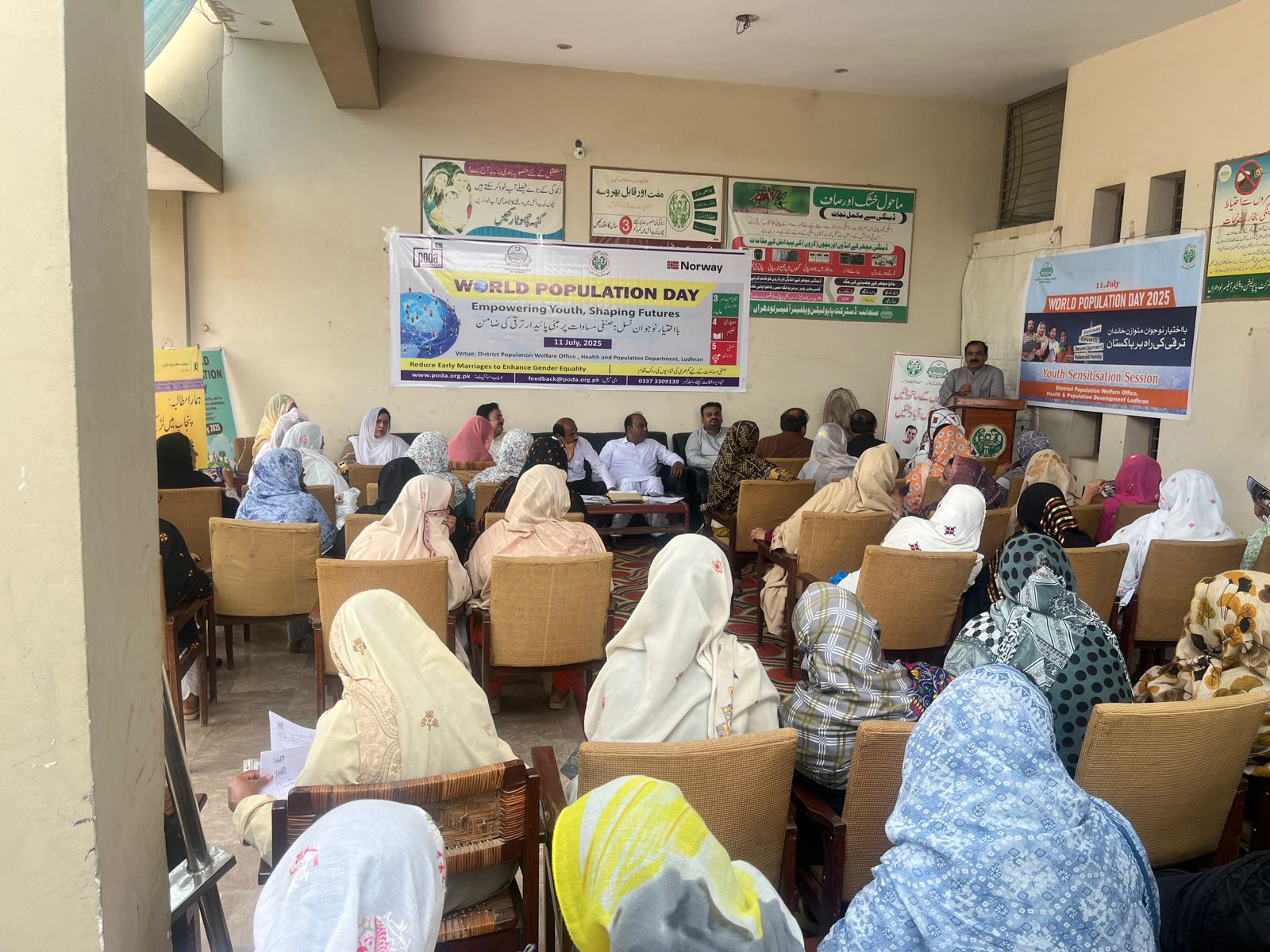
Lodhran, July 11, 2025: The speakers at the seminar organized to observe World Population Day unanimously declared youth to be a valuable asset for Pakistan. They stressed that empowering young people with access to resources and opportunities is essential, yet increasingly difficult amid the country’s rapid population growth. Experts warned that if the current growth rate continues, Pakistan is projected to become the fourth most populous country in the world by 2030.
Under the project “Reduce Early Marriages to Enhance Gender Equality,” supported by the Norwegian Embassy in Islamabad, PODA Pakistan marked World Population Day by organizing a joint seminar with the Department of Health and Population. The event aimed to raise awareness about the pressing challenges of rapid population growth and the critical need to empower youth. The seminar attracted a large and diverse audience, including representatives from education, health, social organizations, civil society, legal professionals, media, and the general public.
District Population Welfare Officer Lodhran, Tariq Mahmood Sakhira, warned that Pakistan’s surging population is creating an alarming imbalance between resources and demand. He emphasized that the country’s sustainable progress depends on equipping the youth with education, health services, and economic opportunities. Participants expressed concern that without urgent action, shrinking access to vital resources will hinder Pakistan’s development.
Ms. Samira Sattar, Regional Coordinator of PODA Multan, highlighted ongoing efforts to combat child marriage—a major barrier to youth empowerment and sustainable development. She identified poverty, limited educational access, and gender inequality as primary drivers of child marriage in Pakistan, disproportionately affecting girls. The impact is profound: only 13% of married girls complete secondary school compared to 44% of their unmarried peers, severely limiting their life opportunities.
Ms. Sattar also praised legal reforms, citing Sindh province’s 2013 law setting the minimum marriage age at 18 for both genders. She welcomed the landmark May 2025 Senate bill that raised the legal marriage age to 18 in Islamabad Capital Territory, criminalizing underage marriage and categorizing sexual relations with minors as statutory rape punishable by up to seven years in prison. These legal advances mark critical progress in protecting children’s rights and promoting gender equality.
Deputy District Officer Dr. Rumaila Ajmal underscored youth as Pakistan’s greatest asset and called for comprehensive training and opportunities to unlock their full potential—a key to national development.
Renowned religious scholar Qari Yaseen highlighted the vital role of parents, grounded in Quran and Hadith teachings, emphasizing that nurturing, educating, and guiding the youth is fundamental to building a just and prosperous society.
The seminar also featured remarks from the General Secretary of Lodhran District Bar Association, reinforcing the shared responsibility to address population growth, child marriage, and youth empowerment.
Participants concluded that tackling these intertwined challenges through education, healthcare, and legal protection is essential for Pakistan to achieve sustainable development and secure a brighter future for generations to come.