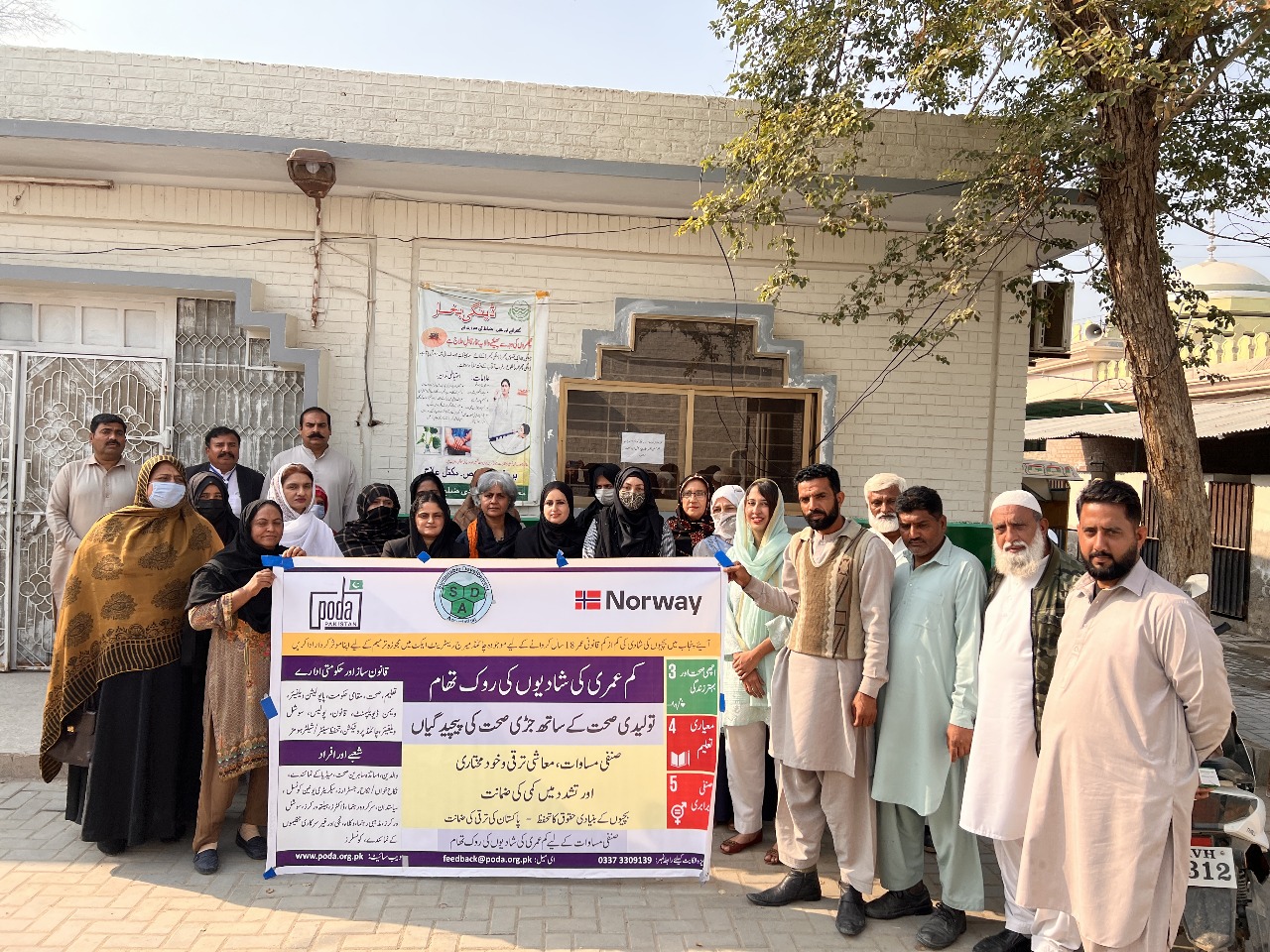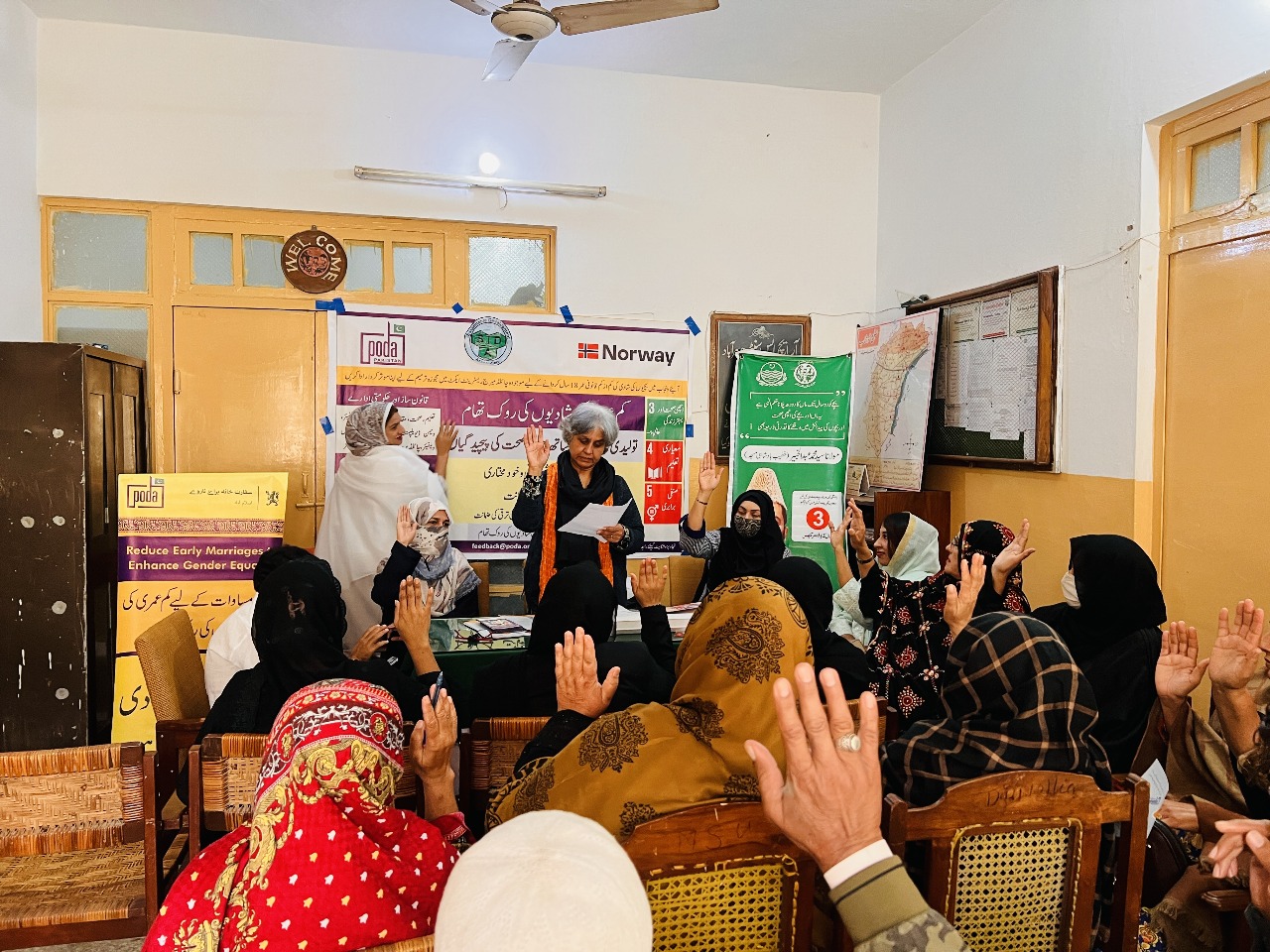
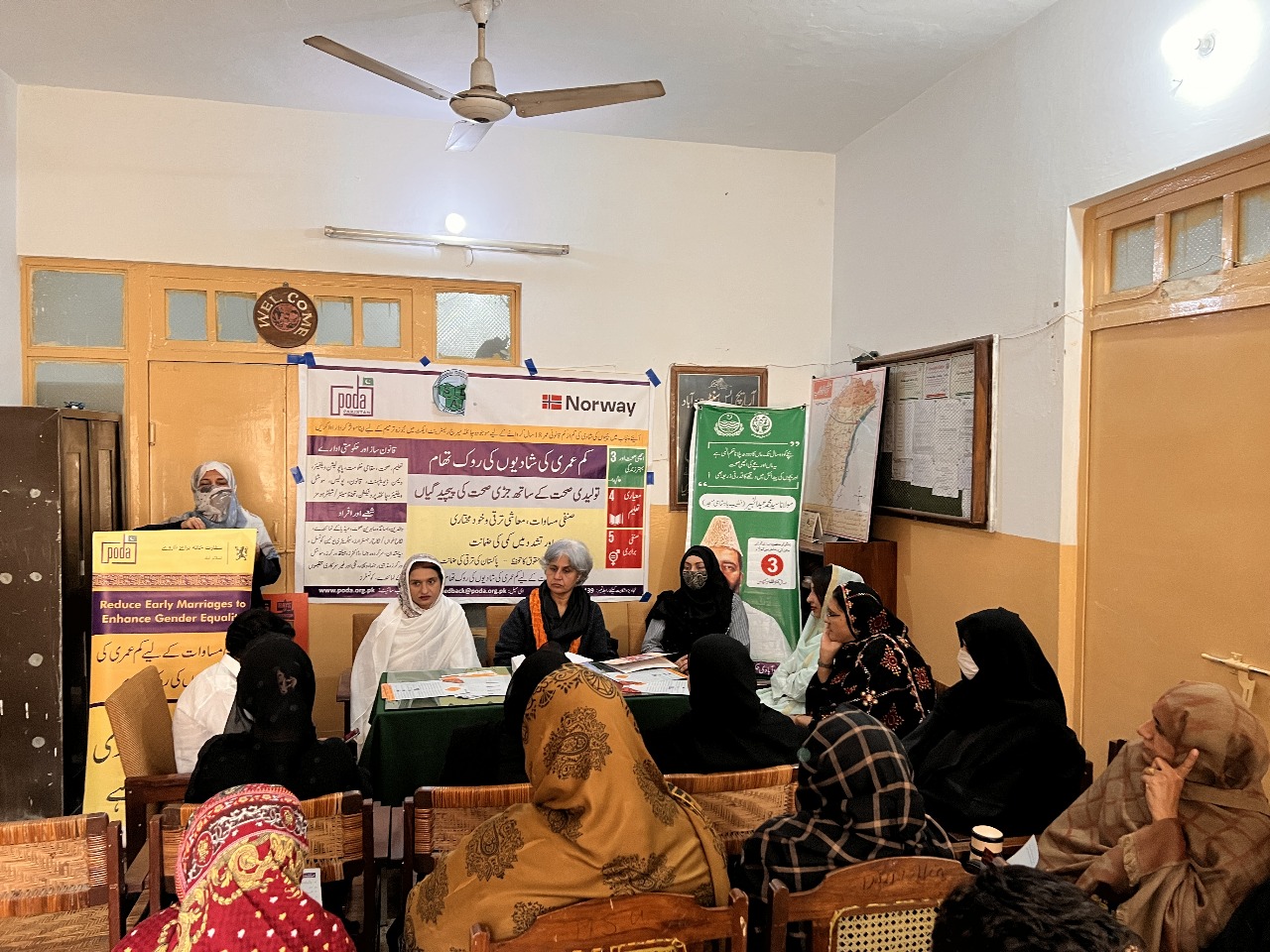
Khushab, Wednesday, 19 November 2025: A district-level workshop on reproductive health and the dangers of early marriage concluded with a unanimous call for legal reforms to raise the minimum marriage age for girls to 18 years in Punjab. The gathering reflected a growing consensus among health specialists, civil society activists and local leaders that urgent action is needed to protect adolescent girls from harmful traditional practices that undermine their health, education and basic rights.
Organized by the Potohar Organization for Development Advocacy (PODA) in collaboration with the District Population Welfare Office Jauharabad (Khushab) and supported by the Sustainable Development Association (SDA), the workshop took place at the Family Health Clinic Hall. The activity was part of PODA’s three-year project, “Reduce Early Marriages to Enhance Gender Equality”, funded by the Norwegian Embassy in Islamabad and set to conclude later this month. The session was linked to the global 16 Days of Activism Campaign against Gender-Based Violence.
Participants – among them women leaders, lawyers, civil society representatives and senior officials from the health, education, population welfare and local government departments – endorsed a resolution urging Punjab to align its marriage laws with those of Sindh, Balochistan and the Islamabad Capital Territory, all of which have already set 18 as the minimum marriage age for both girls and boys.
A major recommendation was the digitization of the nikah-nama to improve transparency, prevent manipulation of age documents and strengthen legal compliance. Participants stressed that without strict enforcement, harmful customs that encourage underage marriage are likely to persist.
Dr. Qambar Draz, Deputy District Officer Technical at the Population and Health Department, warned of severe health risks associated with adolescent pregnancy. She noted that widespread anemia among girls—stemming from poor nutrition, lack of information and low literacy—becomes life-threatening when a young girl becomes pregnant.
She emphasized that a young mother’s body “must work three times harder during pregnancy,” putting enormous strain on her already fragile health. These risks are reflected in Pakistan’s troubling national indicators: a maternal mortality ratio of 186 deaths per 100,000 live births, a neonatal mortality rate of 42 per 1,000 live births, and an infant mortality rate of 62 per 1,000 live births. Early marriage, she stressed, contributes directly to these rates.
Several participants shared testimonies illustrating how harmful traditions—including watta-satta (exchange marriages)—continue to endanger girls in rural communities.
Rukhsana Awan recounted the case of Shumaila, married at 13 in retaliation for a family dispute. The marriage ended within a year, and the girl is now married to a man nearly four times her age.
Shamim Akhter described how underage marriages remain common in Katha Sagral, citing Maria, who was married at 14 after her father’s death.
Malik Muhammad Jahengir, a government school teacher, highlighted the prevalence of large families and early marriages in Rajar and Rodthalla, stressing the need for targeted awareness campaigns.
Other speakers – including Sumera Baloch, Ms. Ghazala, Musarrat Jabeen, Muhammad Hussain, Imran Haider, Abdul Sattar, Attiya Bibi, and Shakeela Nasir—called for long-term community engagement, parental awareness, stronger law enforcement and expanded education for girls. Many noted that parents’ decisions are influenced by poverty, traditional beliefs and the desire to control property.
Legal experts, including Advocate Huma Jahangir and Advocate Iram Faheem, emphasized the need for awareness among religious leaders, who often officiate early marriages without considering long-term consequences. They identified several areas—such as Chak 40 and Chak 1 in UC Mattala—where strong religious influence perpetuates underage marriage.
Participants also raised concerns about the manipulation of birth registration documents to conceal underage marriages, underscoring the need for improved documentation and accountability.
Aqeela Tabassum, District Demographer at the Health and Population Department, stressed that institutional collaboration is essential to safeguard adolescent girls, many of whom face exploitation within their own homes.
PODA Project Manager Nabeela Aslam provided an overview of national marriage legislation, urging Punjab to adopt best practices from other provinces and Muslim countries by introducing legal reforms aligned with current standards. She noted that in regions where the marriage age is set at 18, national identity cards are required for nikah registration—a safeguard Punjab has yet to implement.
The workshop concluded with a performance by PODA folk singer Ali Sher, whose songs promoted girls’ education and discouraged child marriage, reinforcing the message that cultural tools can play a vital role in reshaping social norms.