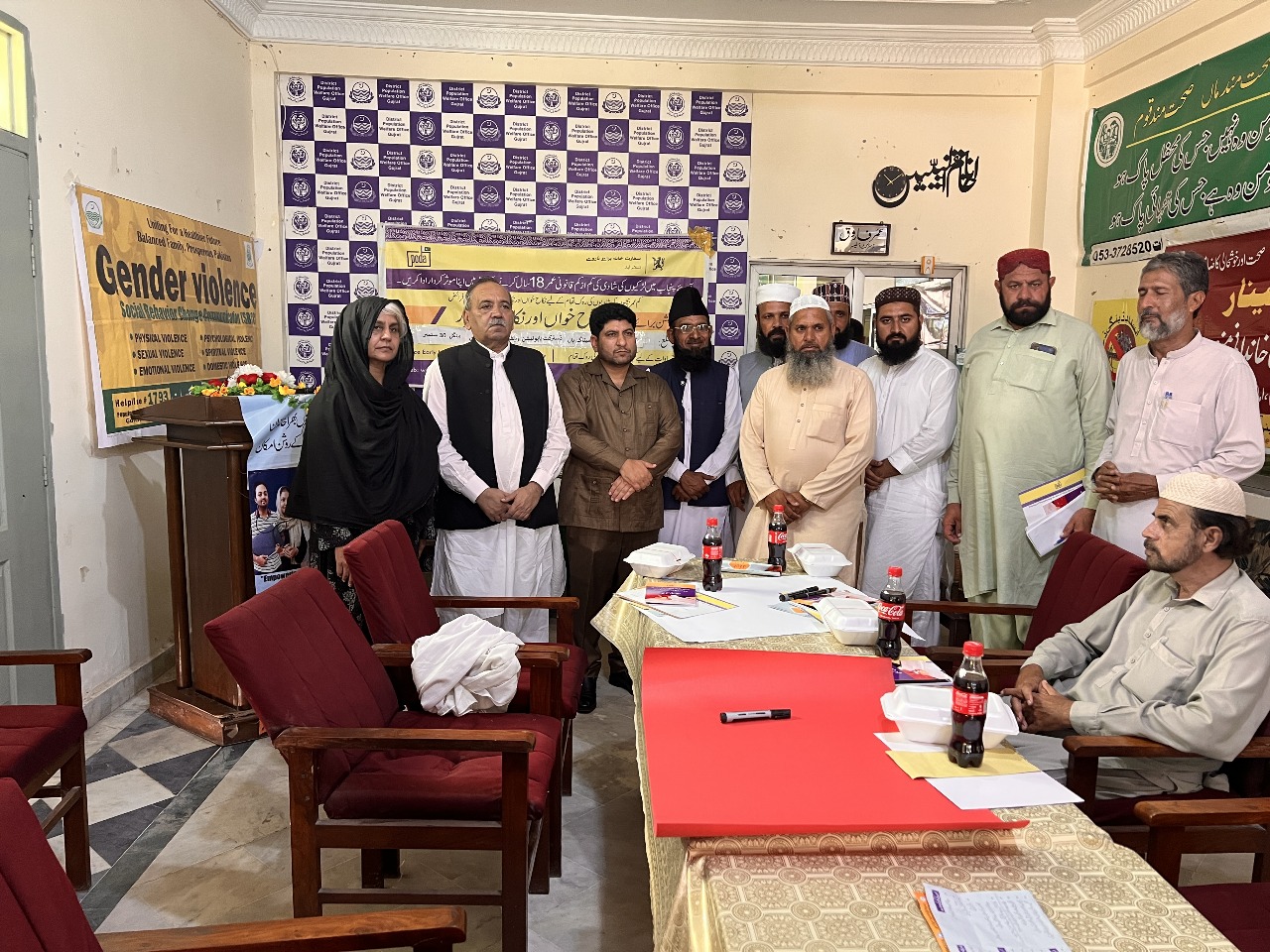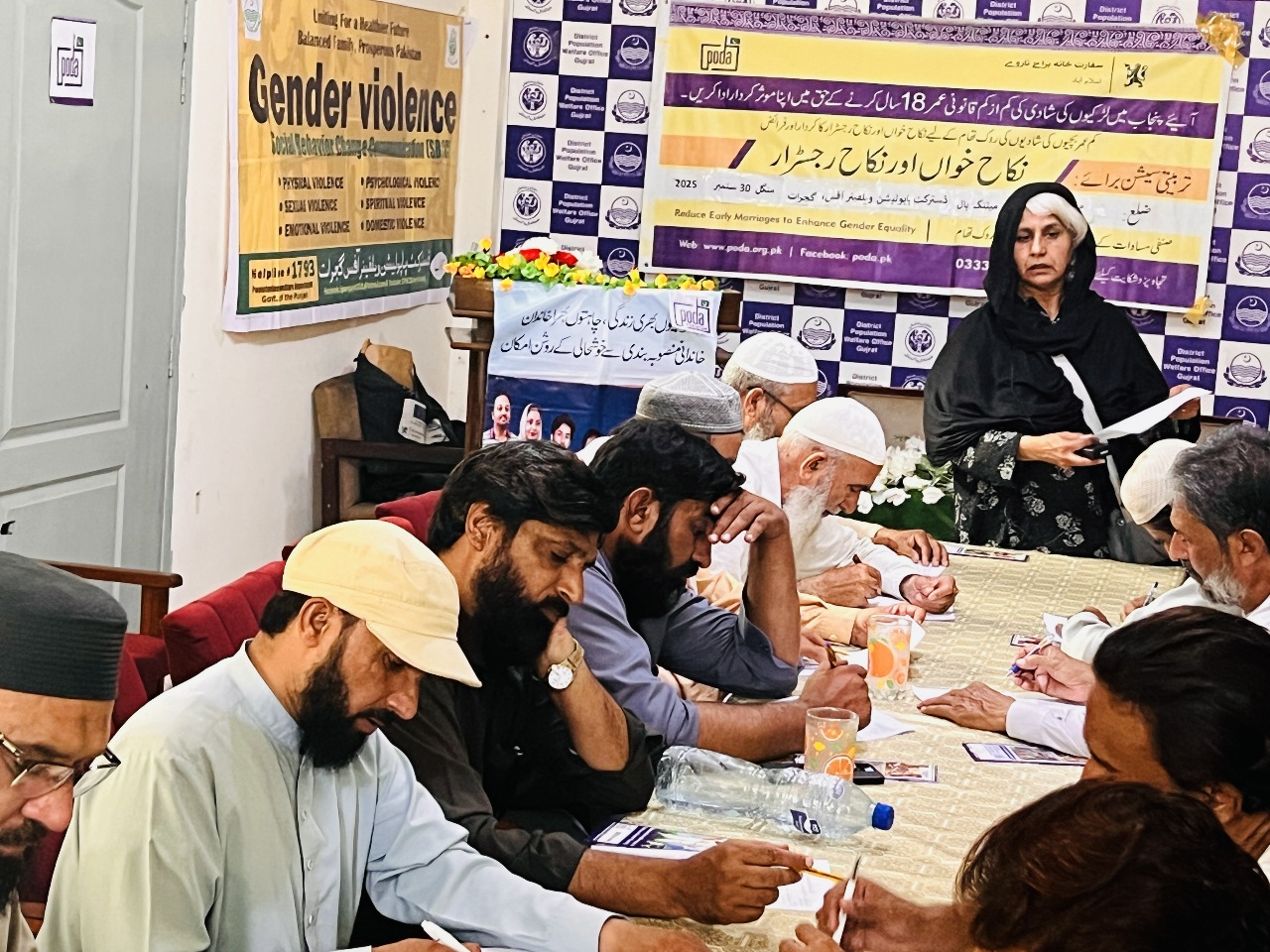
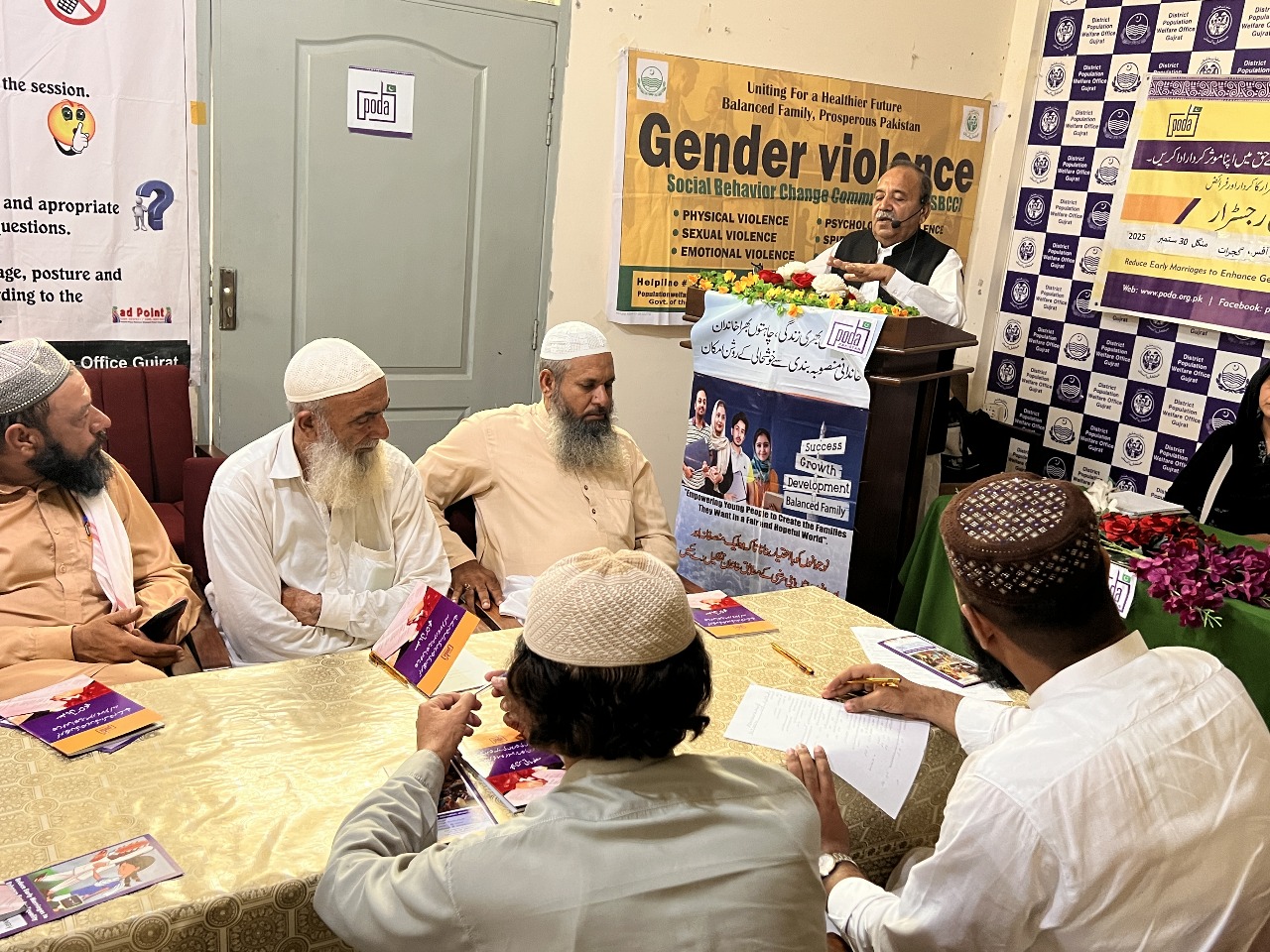
Gujrat, Tuesday, 30 September 2025: Participants of a training session for Nikah Khawan and marriage registrars, organized in collaboration with the District Population Welfare Office, Gujrat, called on provincial legislators to urgently strengthen legal frameworks to protect the rights of girls and boys in Pakistan. Referring to the ICT Child Marriage Restraint Act, the participants stressed that all provinces should adopt and implement similar legislation to curb the practice of underage marriages.
The training, which brought together a large number of Nikah Khawan and registrars, provided a platform to reflect on the social, legal, and health implications of early marriages. Many participants expressed concern that child marriage continues to undermine fundamental rights, particularly the right to education, health, and personal development.
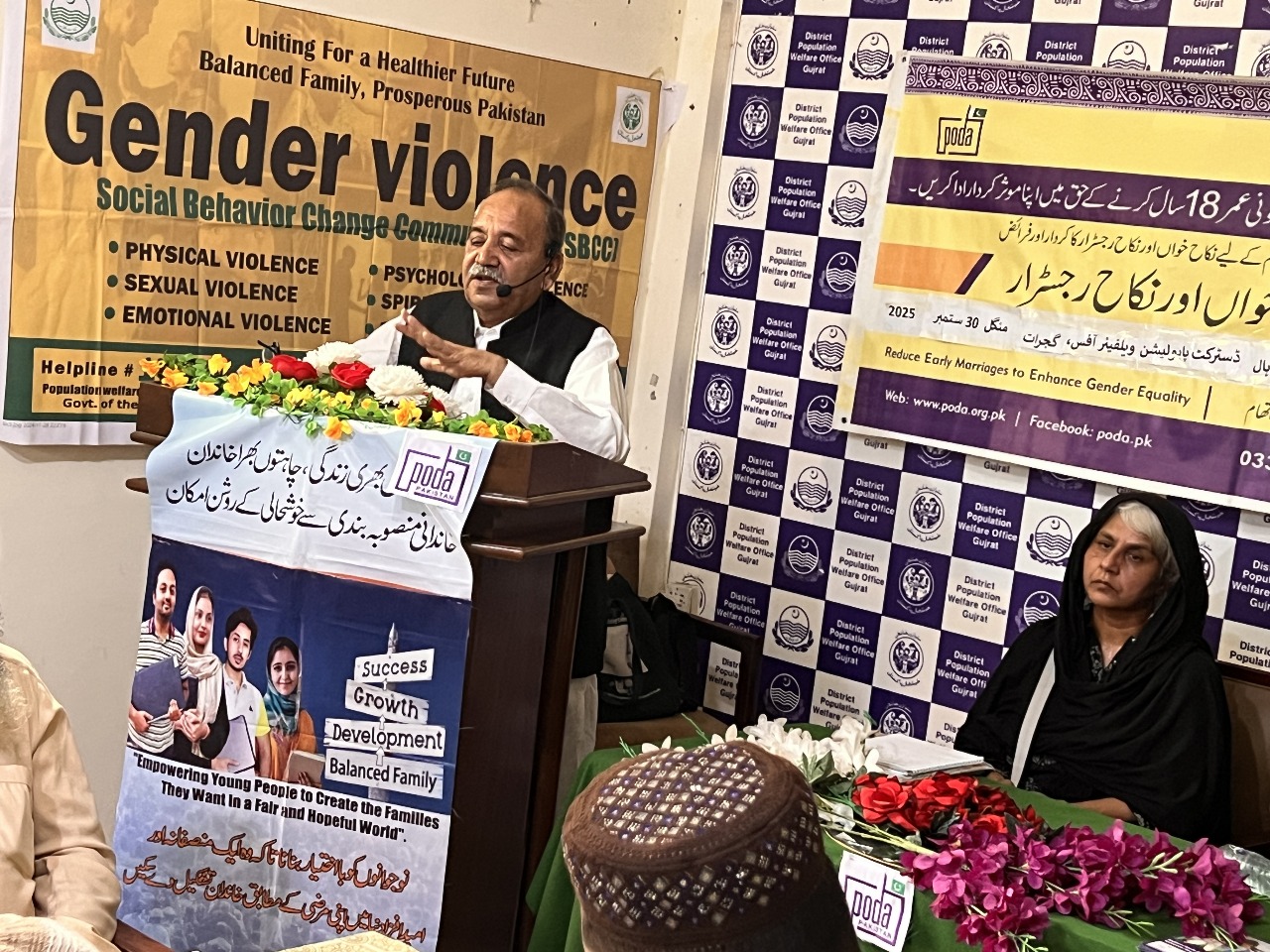
Legal Trainer, Advocate Khawaja Zahid Nasim, legal consultant for PODA, said that under Articles 35 and 38 of the Constitution, all provinces are bound to make laws for the protection of the child, the mother, the family, and marriage. He noted with concern that despite the presence of these provisions, which safeguard the family setup and promote social justice, the provinces have not adequately addressed these constitutional obligations. He underlined the urgent need for consistent legislation across the country to protect the rights of children and families.
The training was conducted by Advocate Khawaja Zahid Nasim and facilitated by Nabeela Aslam and Sohail Yousaf. It was part of the project “Reduce Early Marriages to Enhance Gender Equality,” supported by the Norwegian Embassy in Islamabad and implemented by PODA across 41 districts of Punjab.
Umer Farooq, District Population Welfare Officer, Gujrat, described child marriage as a serious health risk. He noted that due to complications such as fistula, sudden increases in blood pressure, and excessive bleeding during pregnancy and childbirth, the rates of maternal and infant mortality in Pakistan remain alarmingly high. These realities, he said, make it imperative to raise the minimum age of marriage for girls to 18 years.
The participants further emphasized the crucial role of Nikah Khawan in ensuring that marriages are contracted only with the free and informed consent of both adult individuals. They pointed out that while girls are often forced into marriage, boys too can face pressure from their families to marry at an early age, sometimes to protect family property.