SOLUTIONS STRATEGIES RESOLUTION
Adopted at 18th Annual Rural Women Leadership Training Conference by PODA
Held from 15 to 17 October 2025 at Islamabad, Pakistan
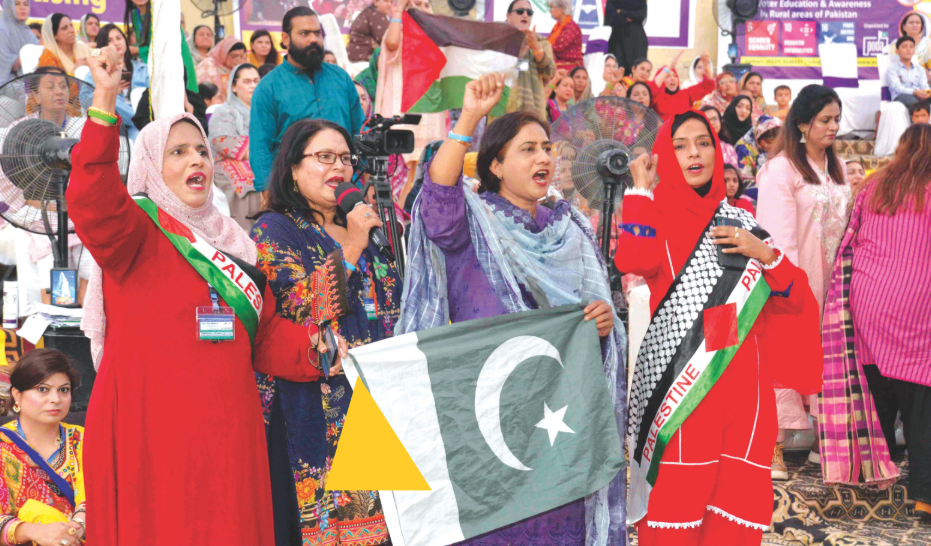
PREAMBLE: More than 1500 rural women leaders from 100 districts of Pakistan met peacefully for three days in the capital of Pakistan to commemorate 15th October (International day of Rural Women), followed by 16th October (World Food Day) and 17th October (World Day for Poverty Eradication). The conference was organized by Potohar Organization for Development Advocacy (PODA) to provide a platform to deliberate on the critical challenges faced by rural women, girls and women with disabilities with special focus on Protection of girls from early and forced marriages and gender based violence, expanding women’s access to the Right to Legal Identity and vote, mainstreaming women’s health, hygiene and nutritional needs and property rights protection in flood recovery and rehabilitation processes, expanding access to education, jobs and digital literacy AI skills for rural girls and women, recognizing the contributions of women farmers in Pakistan’s economy, food security, poverty reduction and facilitating women’s agricultural work with women friendly agricultural machinery, education about plant protection, Olive value addition, financing and training in packaging, marketing and trade opportunities, economic empowerment, civic space and mainstreaming rural women in local governance, climate change education, financing, adaptation and mitigation processes in Pakistan.
This representative assembly of Pakistan’s rural women community leaders adopts the following as PODA Conference 2025 Resolution and urges the legislators, policy makers, UN agencies, donors, businesses, media and the government of Pakistan authorities to spread these messages and use their relevant offices & powers to ensure action on the following demands and recommendations:
1.The Government should prioritize awareness and facilitation of birth registration of girls and daughters’ inclusion in NADRA Family Registration Form-B and registration of CNIC and Vote for women to ensure that Pakistani girls and women are able to access the ‘Right to Legal Identity’. Fathers who do not register daughters’ birth and do not add them in Form-B and husbands who do not add wife in Form-B should pay fine and made accountable for delaying the registration.
2.The legislators should update laws and enforce a uniform minimum legal age of marriage for girls at 18 years similar to current age for boys in all provinces of Pakistan to respect and implement the guarantee of gender equality in the Constitution of Pakistan and to fulfill international commitments made by the government of Pakistan through treaties and to protect the physical and mental health of women and to ensure access to girls right to technical/higher education.
3.Governments in all provinces should take concrete steps to stop early marriages of girls. Only registered Nikah Khawan should be allowed to perform Nikah/marriage ceremony after verifying CNIC of girls and those who perform Nikah of underage girls should be punished with fine and prison and their license should be revoked to protect more girls.
4.Police in all parts of Pakistan especially in rural areas should be educated about the minimum legal age of marriage for girls and should be empowered to stop early age marriages. Police officials who facilitate child marriages should be legally held accountable. Police, especially lower ranks police in rural areas should be educated about pro-women laws of Pakistan and should be trained in sexual abuse crimes investigation from a women’s protection perspective. District administration and police at village Chowki level should be trained how to follow Anti-Rape (Investigation and Trial) Act, 2021 from the time of writing First Information Report (FIR) in rape cases so that a poorly investigated, compromised or gender biased FIR does not make the complaint a weak case for the girl or woman because the court system in Pakistan follows whatever is written in FIR at the start.
5.Children in middle & high schools should get education about sexual abuse prevention, reporting and importance of saving evidence and informing teachers and parents. Teachers and parents should be educated through public awareness campaigns about their duty to protect children and how to access and use government helplines to report violence cases.
6.Ensure that ongoing government surveys and BISP interventions in flood-affected areas comprehensively record women-headed households and assess women’s work and income losses, enabling women’s direct access to cash compensation, agricultural inputs, land restoration and property rights support to women in their names.
7.Increase middle and high schools for girls in rural areas to ensure their Constitutional ‘Right to Education’ by providing safe schools, trained teachers, books, lunch, toilets with water & soap to ensure quality education and awareness about nutrition and menstrual hygiene.
8.The government in all provinces should ensure substantial and not just token representation of women in government offices, disaster management and environmental assessment bodies at district, provincial and national levels and take concrete steps to provide training to include women and girls’ representation in climate response, recovery, education & financing work.
9.NDMA, PDMA, and district Rescue 1122 offices should hire more women staff and give First Aid, Swimming and Boating training in girls high schools at district level to prepare women workers for year-round rescue operations to provide immediate assistance to girls / women during natural disasters/emergency situations. Practical education on climate, disaster preparedness/response should be incorporated in primary, middle & high schools.
10.The government should officially recognize agriculture worker women as “Farmers” and document their contributions in agriculture growth, food security, plant protection, Olive Value Chain, agriculture and livestock products and ensure women’s equal access to agricultural training, subsidies, inputs, equipment, equal wages, credit and land ownership and ensure 50% representation of women farmers and women led organizations in all agricultural committees and projects meetings at district and above levels to ensure women are equally represented and facilitated to participate in policy making and action.
11.The government should allocate sufficient budget annually for Tehsil level to conduct quarterly tree plantation campaigns and provide location relevant trees to plant along levees, dikes, and flood barriers in riverine regions to prevent erosion and reduce flood related damages.
12.Private companies and the government should join hands to expand Bus Stops with Shades, Clean and Decent Ladies Toilets in private and government offices, district courts and Public Spaces and set-up Working Women Hostel facilities at Tehsil and above levels across Pakistan and provide electric two-wheelers and “Pink Scooty” and start more bus services for women.
13.The legislators should update laws to reserve at least 50% representation for women in local government institutions and hold local elections without delay in all provinces and increase inclusion of women in district peace, safety, dispute resolution and voter education committees.
14.Women’s groups at Tehsil/district levels should be included in district budget making & ADP processes to ensure that girls & women’s needs are included in budget line items. Quarterly budget review should invite women’s NGOs to suggest activities to ensure all budget is spent annually & development funds meant for local community needs are not returned unspent.
15.Strict implementation of Protection from Harassment at Workplace Law of Pakistan should be ensured by the government in all government, private and educational offices, factories & companies. Women & girls should be educated about laws that can protect them.
16.Telecom companies, banks, businesses, semi-government companies, multinationals, UN among others operating in Pakistan should prioritize outreach and support to rural women and girls to provide them opportunities for income generation skills, digital literacy, AI/Cyber Security jobs.
17.International donors, the EU and UN agencies should provide direct financial support to mid-level women’s rights NGOs so that the civil society can increase from the middle and should not only continue to fund large NGOs that already have good financial assets and funding history. Pakistani philanthropists should also fund women’s human rights work not only charity work.
18.Pakistani CBOs/NGOs working for women’s human rights, demanding end to child marriage and protection of children and women from violence, should not be considered anti-state agents, rivals or competitors by all those who currently do and should be seen as allies and front line workers at grassroots level and facilitated, respected and valued for their dedicated hard work, regular salary tax payments and contributions to improving Pakistan. Banks should not delay NGOs account opening and open NGO bank accounts as per orders of the State Bank of Pakistan.
Adopted with mutual agreement and show of hands by the Participants of the 18th Annual Rural Women Leadership Conference by PODA-Pakistan on Friday 17th October 17, 2025 at Islamabad. For more information, contact or call 051-8773808 or 03130852522
This representative assembly of Pakistan’s rural women community leaders adopts the following as PODA Conference 2025 Resolution and urges the legislators, policy makers, UN agencies, donors, businesses, media and the government of Pakistan authorities to spread these messages and use their relevant offices & powers to ensure action on the following demands and recommendations:
1.The Government should prioritize awareness and facilitation of birth registration of girls and daughters’ inclusion in NADRA Family Registration Form-B and registration of CNIC and Vote for women to ensure that Pakistani girls and women are able to access the ‘Right to Legal Identity’. Fathers who do not register daughters’ birth and do not add them in Form-B and husbands who do not add wife in Form-B should pay fine and made accountable for delaying the registration.
2.The legislators should update laws and enforce a uniform minimum legal age of marriage for girls at 18 years similar to current age for boys in all provinces of Pakistan to respect and implement the guarantee of gender equality in the Constitution of Pakistan and to fulfill international commitments made by the government of Pakistan through treaties and to protect the physical and mental health of women and to ensure access to girls right to technical/higher education.
3.Governments in all provinces should take concrete steps to stop early marriages of girls. Only registered Nikah Khawan should be allowed to perform Nikah/marriage ceremony after verifying CNIC of girls and those who perform Nikah of underage girls should be punished with fine and prison and their license should be revoked to protect more girls.
4.Police in all parts of Pakistan especially in rural areas should be educated about the minimum legal age of marriage for girls and should be empowered to stop early age marriages. Police officials who facilitate child marriages should be legally held accountable. Police, especially lower ranks police in rural areas should be educated about pro-women laws of Pakistan and should be trained in sexual abuse crimes investigation from a women’s protection perspective. District administration and police at village Chowki level should be trained how to follow Anti-Rape (Investigation and Trial) Act, 2021 from the time of writing First Information Report (FIR) in rape cases so that a poorly investigated, compromised or gender biased FIR does not make the complaint a weak case for the girl or woman because the court system in Pakistan follows whatever is written in FIR at the start.
5.Children in middle & high schools should get education about sexual abuse prevention, reporting and importance of saving evidence and informing teachers and parents. Teachers and parents should be educated through public awareness campaigns about their duty to protect children and how to access and use government helplines to report violence cases.
6.Ensure that ongoing government surveys and BISP interventions in flood-affected areas comprehensively record women-headed households and assess women’s work and income losses, enabling women’s direct access to cash compensation, agricultural inputs, land restoration and property rights support to women in their names.
7.Increase middle and high schools for girls in rural areas to ensure their Constitutional ‘Right to Education’ by providing safe schools, trained teachers, books, lunch, toilets with water & soap to ensure quality education and awareness about nutrition and menstrual hygiene.
8.The government in all provinces should ensure substantial and not just token representation of women in government offices, disaster management and environmental assessment bodies at district, provincial and national levels and take concrete steps to provide training to include women and girls’ representation in climate response, recovery, education & financing work.
9.NDMA, PDMA, and district Rescue 1122 offices should hire more women staff and give First Aid, Swimming and Boating training in girls high schools at district level to prepare women workers for year-round rescue operations to provide immediate assistance to girls / women during natural disasters/emergency situations. Practical education on climate, disaster preparedness/response should be incorporated in primary, middle & high schools.
10.The government should officially recognize agriculture worker women as “Farmers” and document their contributions in agriculture growth, food security, plant protection, Olive Value Chain, agriculture and livestock products and ensure women’s equal access to agricultural training, subsidies, inputs, equipment, equal wages, credit and land ownership and ensure 50% representation of women farmers and women led organizations in all agricultural committees and projects meetings at district and above levels to ensure women are equally represented and facilitated to participate in policy making and action.
11.The government should allocate sufficient budget annually for Tehsil level to conduct quarterly tree plantation campaigns and provide location relevant trees to plant along levees, dikes, and flood barriers in riverine regions to prevent erosion and reduce flood related damages.
12.Private companies and the government should join hands to expand Bus Stops with Shades, Clean and Decent Ladies Toilets in private and government offices, district courts and Public Spaces and set-up Working Women Hostel facilities at Tehsil and above levels across Pakistan and provide electric two-wheelers and “Pink Scooty” and start more bus services for women.
13.The legislators should update laws to reserve at least 50% representation for women in local government institutions and hold local elections without delay in all provinces and increase inclusion of women in district peace, safety, dispute resolution and voter education committees.
14.Women’s groups at Tehsil/district levels should be included in district budget making & ADP processes to ensure that girls & women’s needs are included in budget line items. Quarterly budget review should invite women’s NGOs to suggest activities to ensure all budget is spent annually & development funds meant for local community needs are not returned unspent.
15.Strict implementation of Protection from Harassment at Workplace Law of Pakistan should be ensured by the government in all government, private and educational offices, factories & companies. Women & girls should be educated about laws that can protect them.
16.Telecom companies, banks, businesses, semi-government companies, multinationals, UN among others operating in Pakistan should prioritize outreach and support to rural women and girls to provide them opportunities for income generation skills, digital literacy, AI/Cyber Security jobs.
17.International donors, the EU and UN agencies should provide direct financial support to mid-level women’s rights NGOs so that the civil society can increase from the middle and should not only continue to fund large NGOs that already have good financial assets and funding history. Pakistani philanthropists should also fund women’s human rights work not only charity work.
18.Pakistani CBOs/NGOs working for women’s human rights, demanding end to child marriage and protection of children and women from violence, should not be considered anti-state agents, rivals or competitors by all those who currently do and should be seen as allies and front line workers at grassroots level and facilitated, respected and valued for their dedicated hard work, regular salary tax payments and contributions to improving Pakistan. Banks should not delay NGOs account opening and open NGO bank accounts as per orders of the State Bank of Pakistan.
Adopted with mutual agreement and show of hands by the Participants of the 18th Annual Rural Women Leadership Conference by PODA-Pakistan on Friday 17th October 17, 2025 at Islamabad. For more information, contact