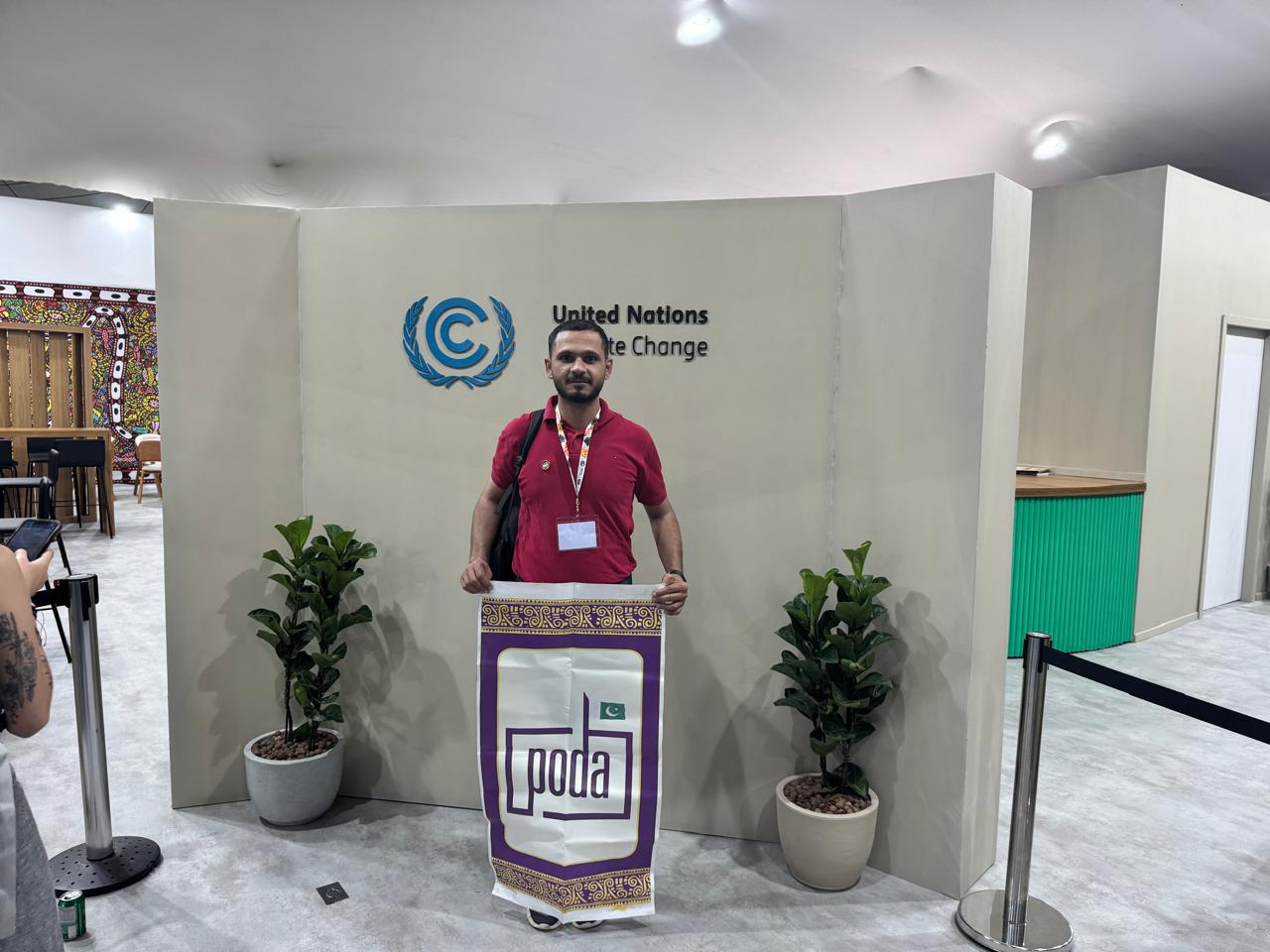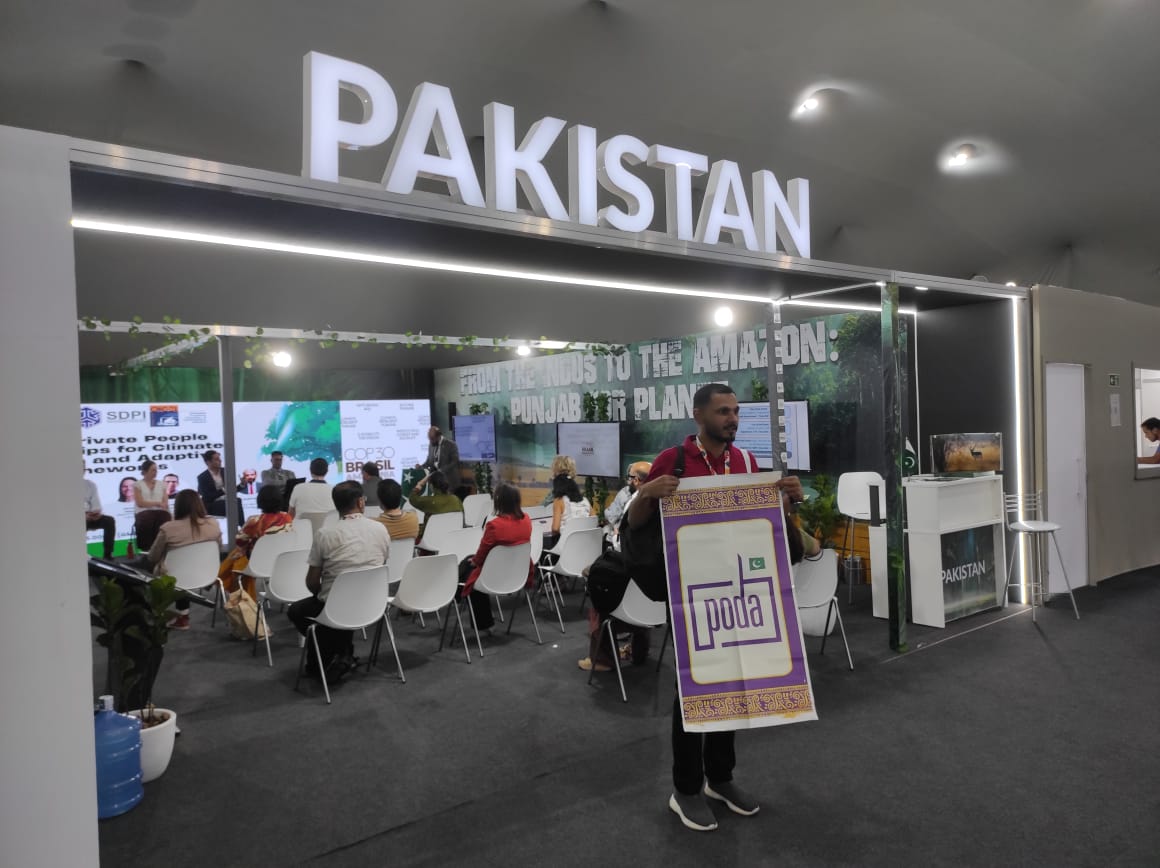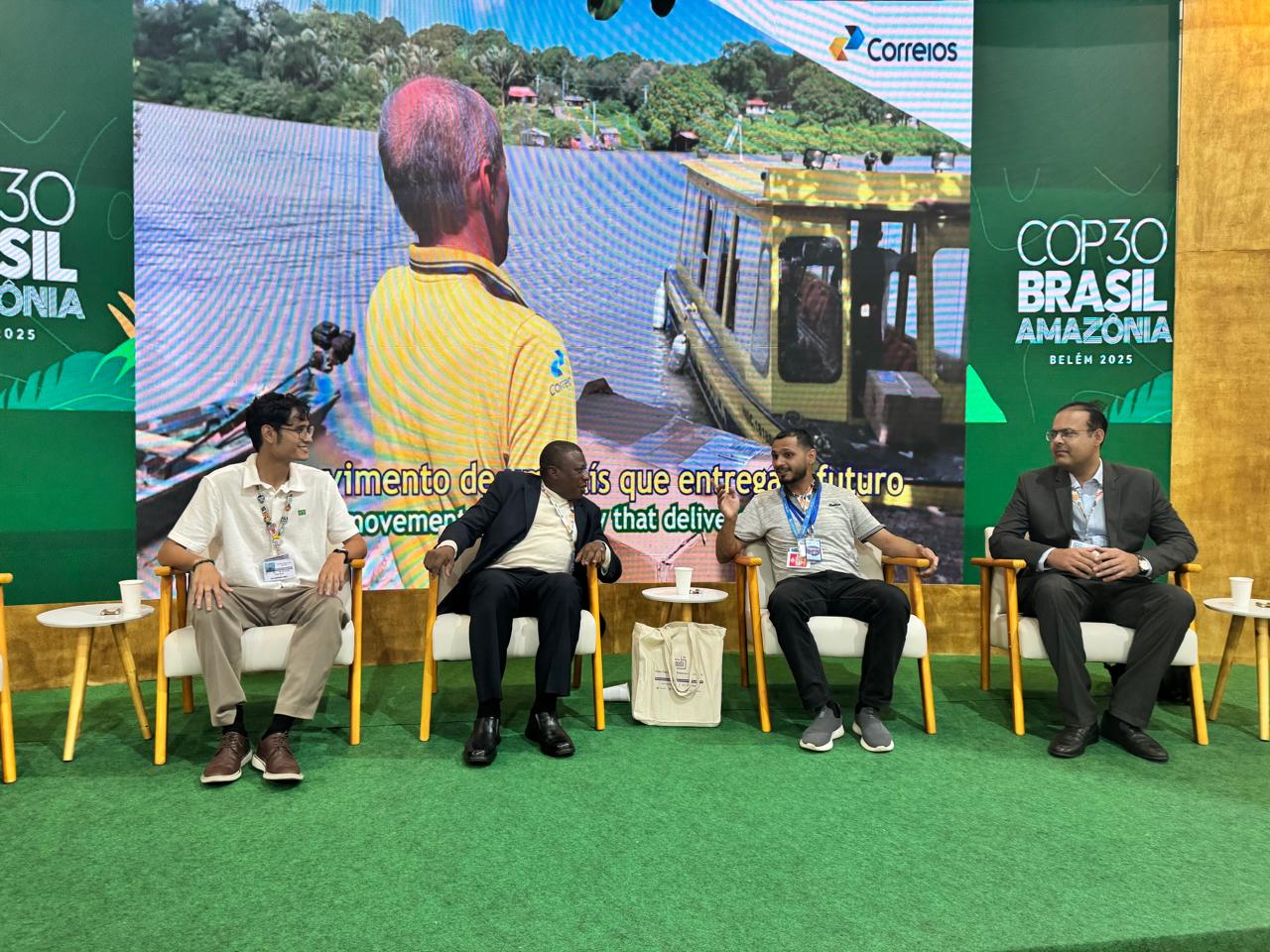
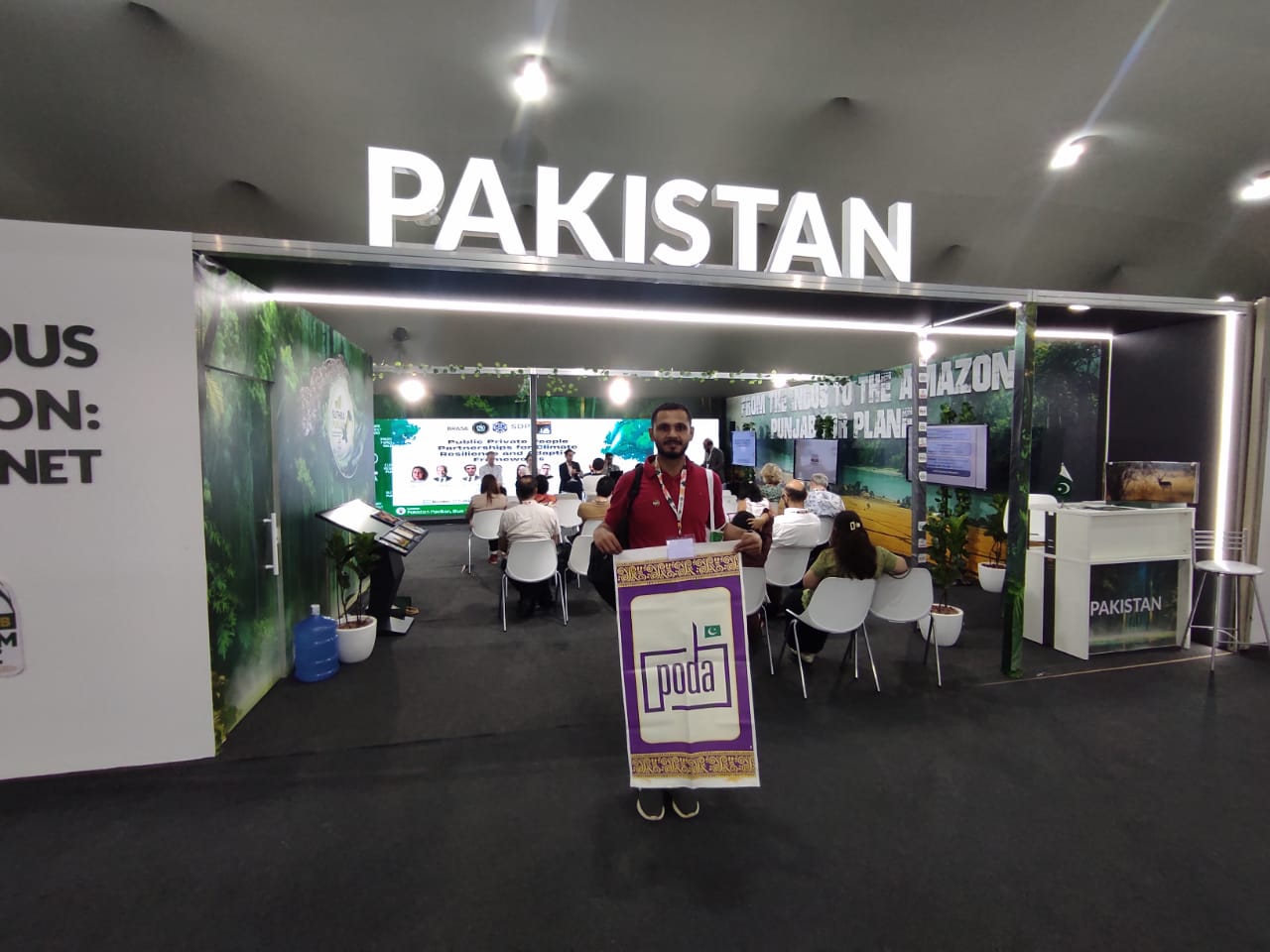
Belém, Brazil- Pakistani youth climate advocate Abdul Basit Mushtaq, supported by the Potohar Organization for Development Advocacy (PODA), participated in COP30, engaging with global youth and climate leaders to promote youth-friendly climate education and cultural storytelling
“Climate education cannot be taught with complicated jargon,” he said. “Young people understand better through stories, theatre, and cultural experiences that make climate issues real and urgent.”
He highlighted PODA’s impactful work, which empowers rural women and youth through climate-smart agriculture, water conservation, soil health initiatives, and economic skills. PODA’s weekly awareness and training programs equip rural communities to adapt to climate change, while the Annual Rural Women’s Leadership Conference connects community leaders with policymakers to ensure rural voices shape national decisions. Creative outreach programs like Jugni Theatre make climate education accessible, emotional, and inspiring, especially in regions where formal programs do not reach.
With 64% of Pakistan’s population under 30 and only 19% of youth aged 15–24 well-informed on climate change, he called for stronger collaboration between government and civil society to raise awareness.
At COP30, He urged governments, educators, and climate organizations to recognize young people as key partners in building a resilient and inclusive future. “Without youth involvement, we cannot achieve meaningful climate progress,” he said. By supporting youth leaders like Abdul Basit Mushtaq, PODA ensures that the perspectives of rural communities and young people are represented on global platforms, showing that climate action is most effective when inclusive, locally rooted, and culturally engaging.