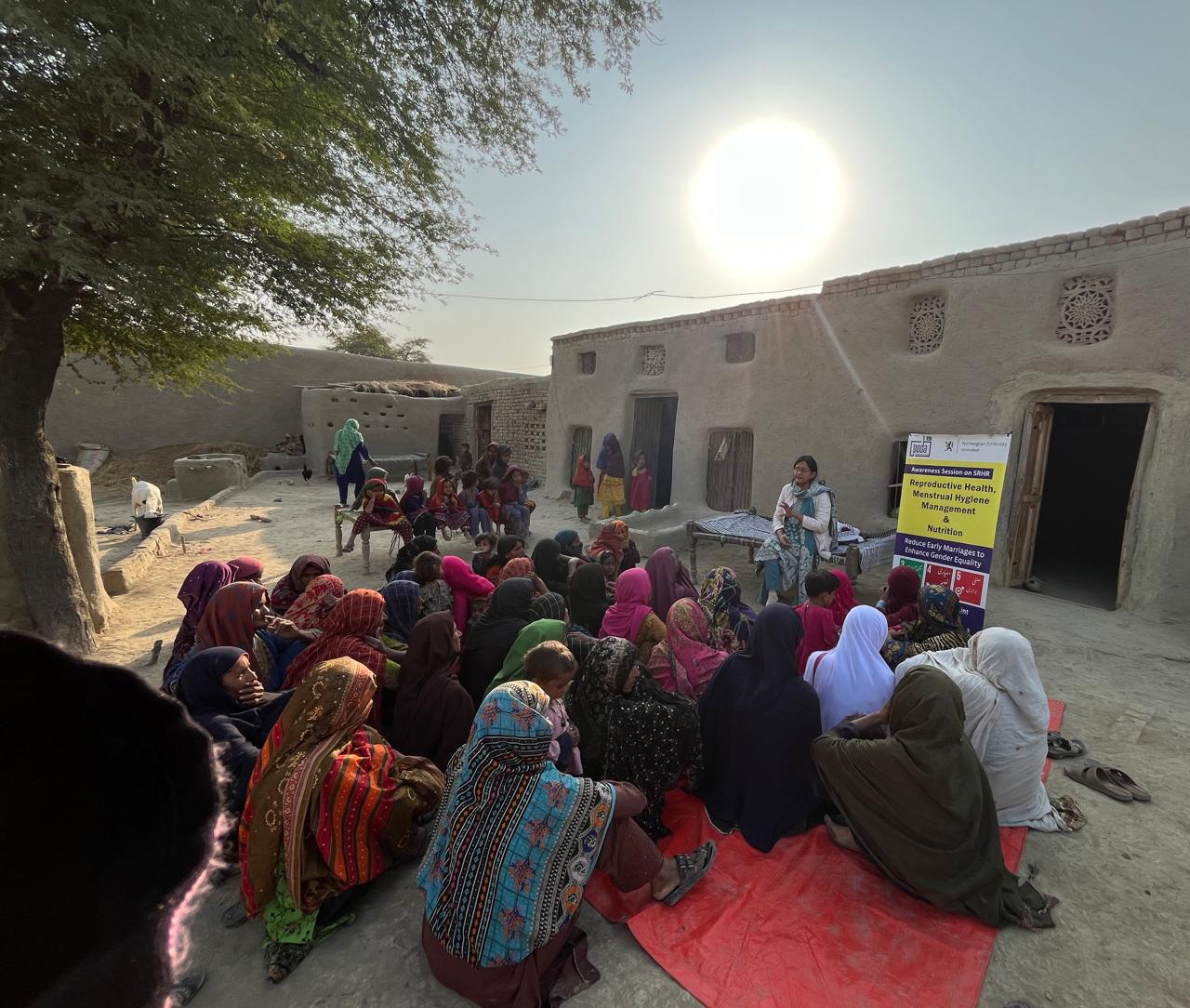
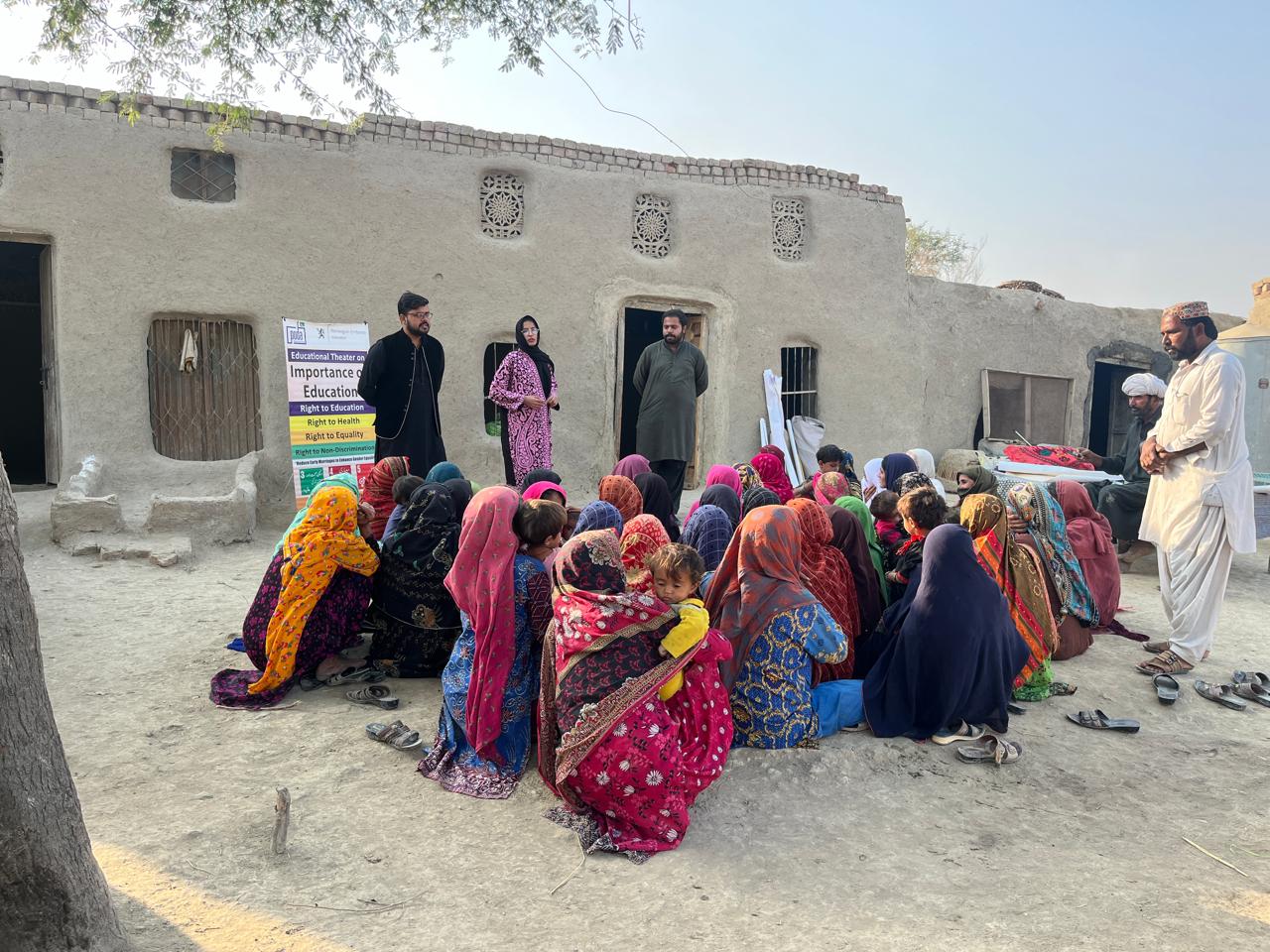
18 November 2025: The PODA-Pakistan team, under the project “Reducing Early Marriages to Enhance Gender Equality,” visited Basti Habib Sheikh in Tehsil and District Rajanpur, Punjab, an area known for prevalent early child marriages and low rates of girls’ education. Most girls leave school after the 5th grade, and early marriages between ages 13 to 15 remain common. During the session, women shared that the nearest girls’ school is far, requiring children to cross a main road and canal, raising safety concerns. The community also showed limited awareness of the importance of education and the harms of early marriage.
When questioned, community members initially claimed marriages did not occur before age 18, but further discussion revealed that young women aged around 21 and 24 already had multiple children. Many mothers believed marriage was the only secure future for their daughters due to poverty, social pressures, and limited opportunities. They shared concerns about unemployment, inflation, and the belief that girls should focus on household work instead of school.
The session also addressed menstrual hygiene, where it became evident that most women used cloth without awareness of hygienic practices. They were guided on proper use of sanitary pads, safe disposal methods, and the importance of maintaining hygiene during menstruation, along with nutritional guidance for adolescent girls.
Facilitators emphasized education as a constitutional right, the distinction between adulthood and maturity, and the physical and emotional risks associated with early marriage. Misconceptions such as avoiding milk, protein, or bathing during menstruation were also clarified.
A theatre performance titled “Preference on Education, Not Early Marriage,” presented by the Pak Culture Society, highlighted the value of girls’ education through a story about a mother challenging the early marriage of her daughter. The play used relatable local scenarios and encouraged audience reflection. In an interactive discussion afterward, most participants supported the girl pursuing education instead of marriage and showed increased awareness about the legal and health consequences of early marriage.
By the session’s end, mothers pledged to support their daughters’ education and work collectively to prevent early marriages. Participants expressed that they now understood the importance of discussing menstrual health, recognized education as a pathway out of poverty, and accepted that early marriage is harmful and legally discouraged.