PODA Trains Nikah Khawan and Registrars in Sialkot for their Effective Role to Reduce Child Marriages
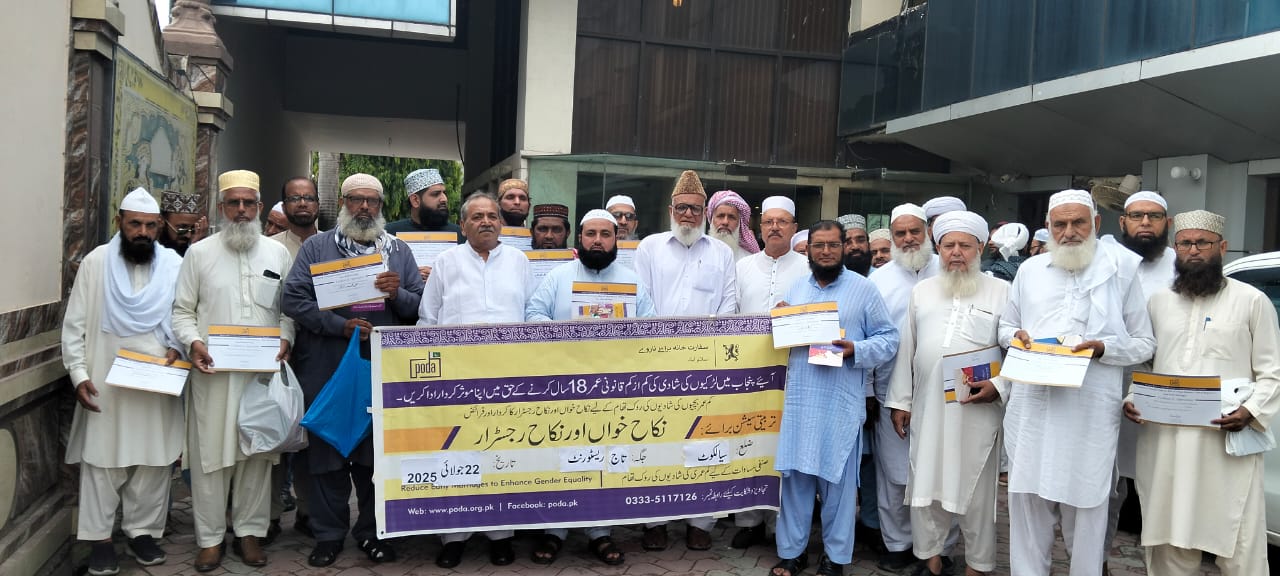
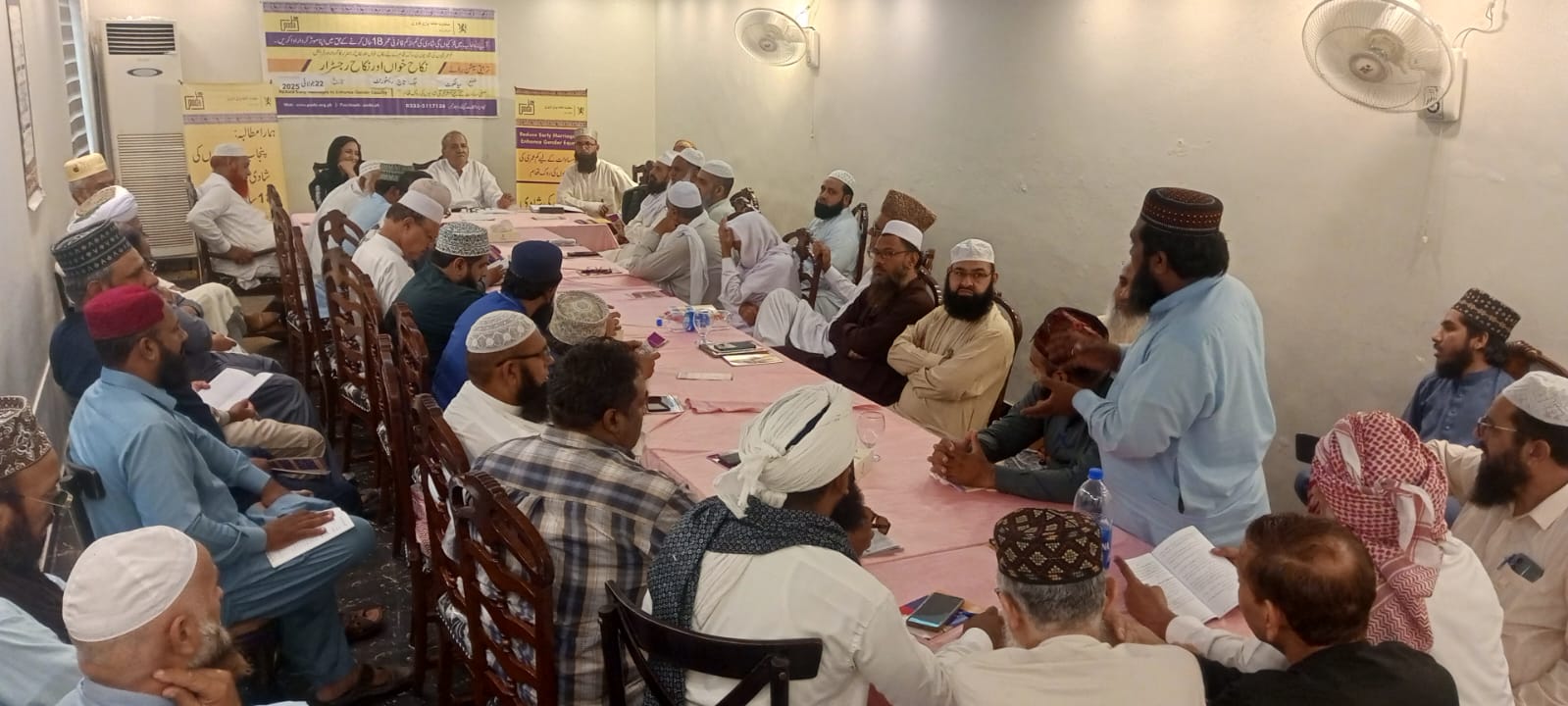
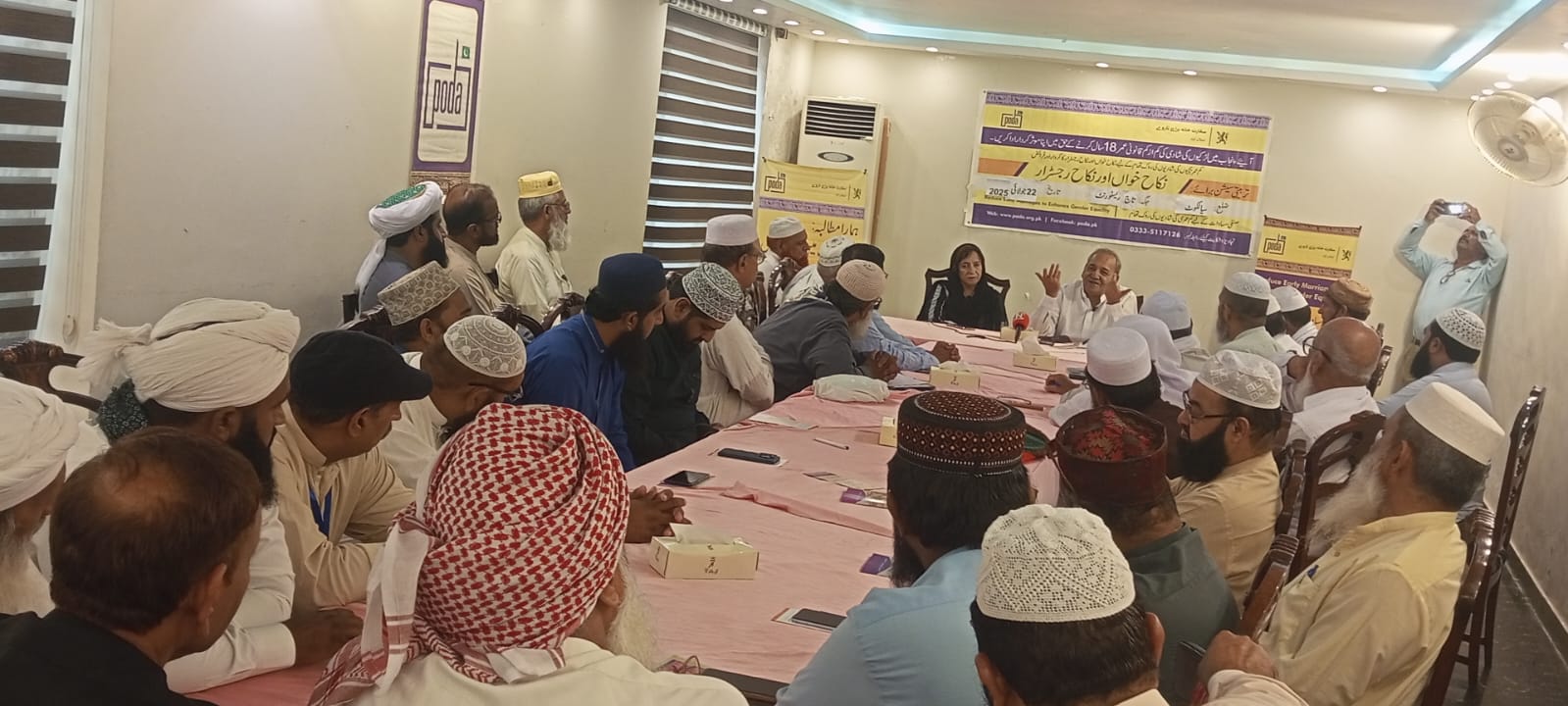
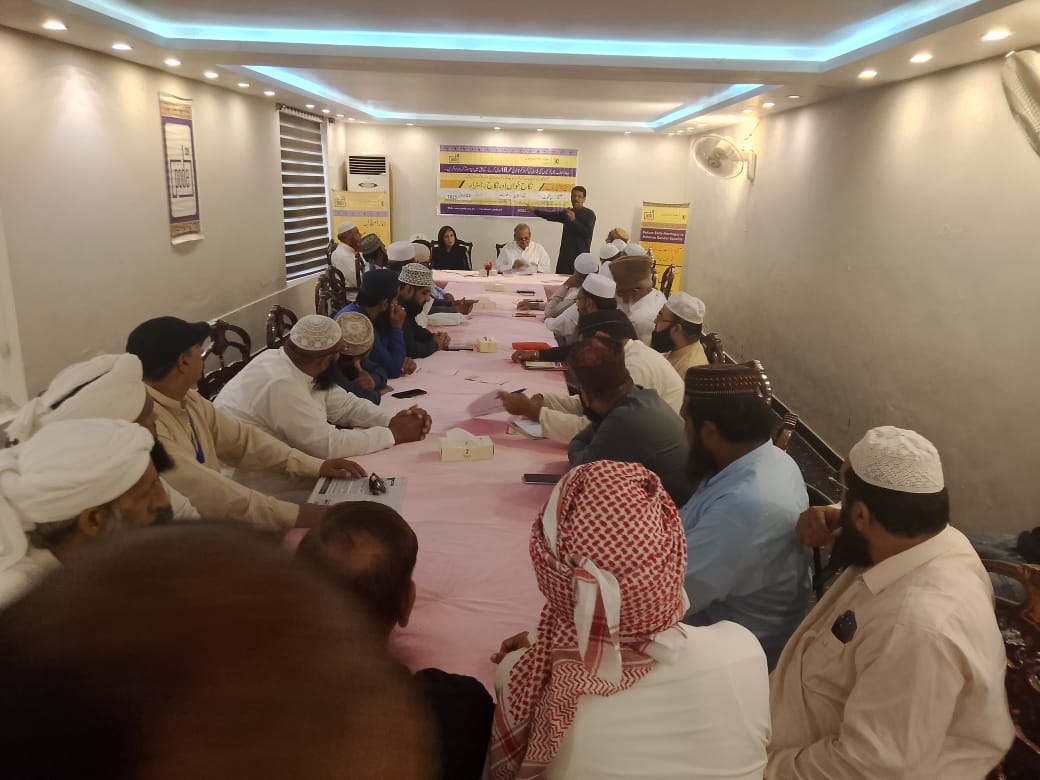
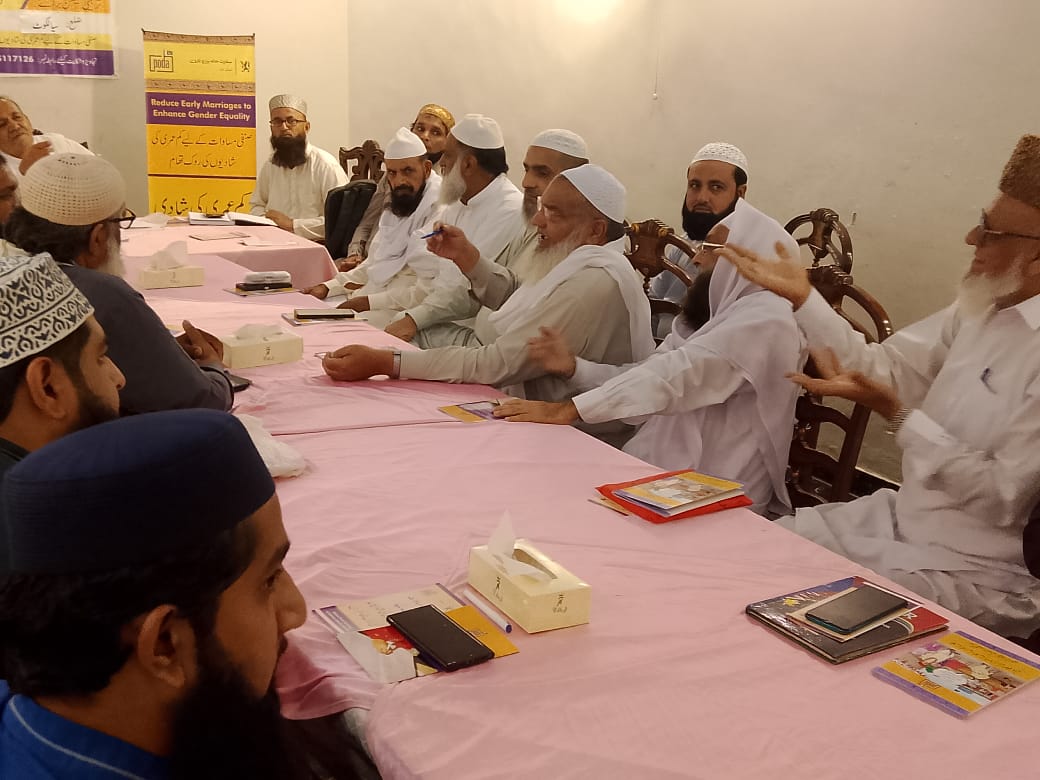
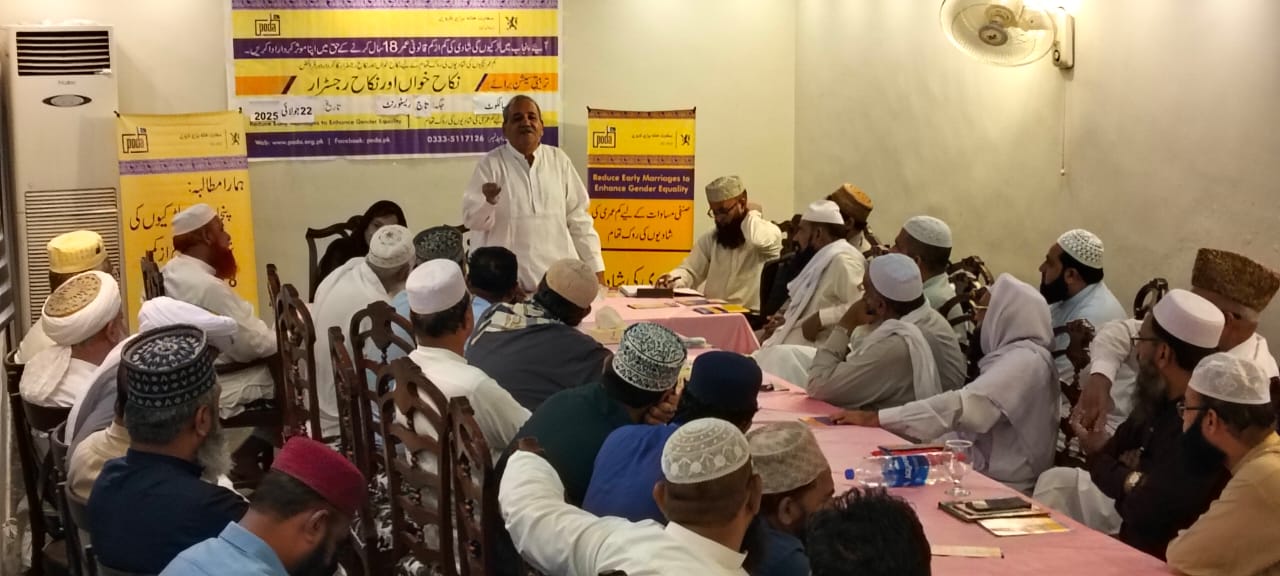
Tuesday, 22 July 2025: PODA held a one-day training session in District Sialkot, in collaboration with the Local Government, to equip Nikah Registrars and Nikah Khawan with legal knowledge and practical tools to help prevent child marriages. The training took place at a local hotel and was attended by more than 35 participants from across the district. The initiative was supported by the Norwegian Embassy in Islamabad.
Talat Zahid, PODA Women Leader, opened the session by welcoming participants and emphasizing the critical role of registrars and religious leaders in protecting the rights of girls. She noted that Nikah Registrars are legal authorities who must ensure marriages comply with national laws and constitutional principles.
Sohail Yousaf, Project Officer at PODA Pakistan, introduced the organization’s mission to advance gender equality and protect children. He also presented the ongoing project, “Reduce Early Marriages to Enhance Gender Equality,” currently being implemented in 41 districts of Punjab.
The training was led by Advocate Khawaja Zahid Nasim, who covered key legislation including the Islamabad Child Marriage Restraint Act 2024, Punjab’s 2015 child marriage law, and the Muslim Family Laws Ordinance 1961. He stressed the need for accurate and timely marriage documentation and highlighted recent court decisions affirming 18 years as the minimum legal age for marriage, aligning with Article 25-A of the Constitution and international norms.
The participants discussed the legal and religious aspects of Nikah, agreeing that it is a binding legal contract that must be registered properly. They supported the government’s authority to set a minimum marriage age and shared ideas to improve enforcement, such as creating a mobile app for Nikah registration, providing registrar training, and revising the nikah-nama to reflect current legal and social needs.
They also called for the inclusion of child marriage prevention in the National Health Policy and suggested that laws and guidelines be made accessible in local languages. A key recommendation was the uniform enforcement of the 18-year minimum age for marriage nationwide, linked with CNIC verification.
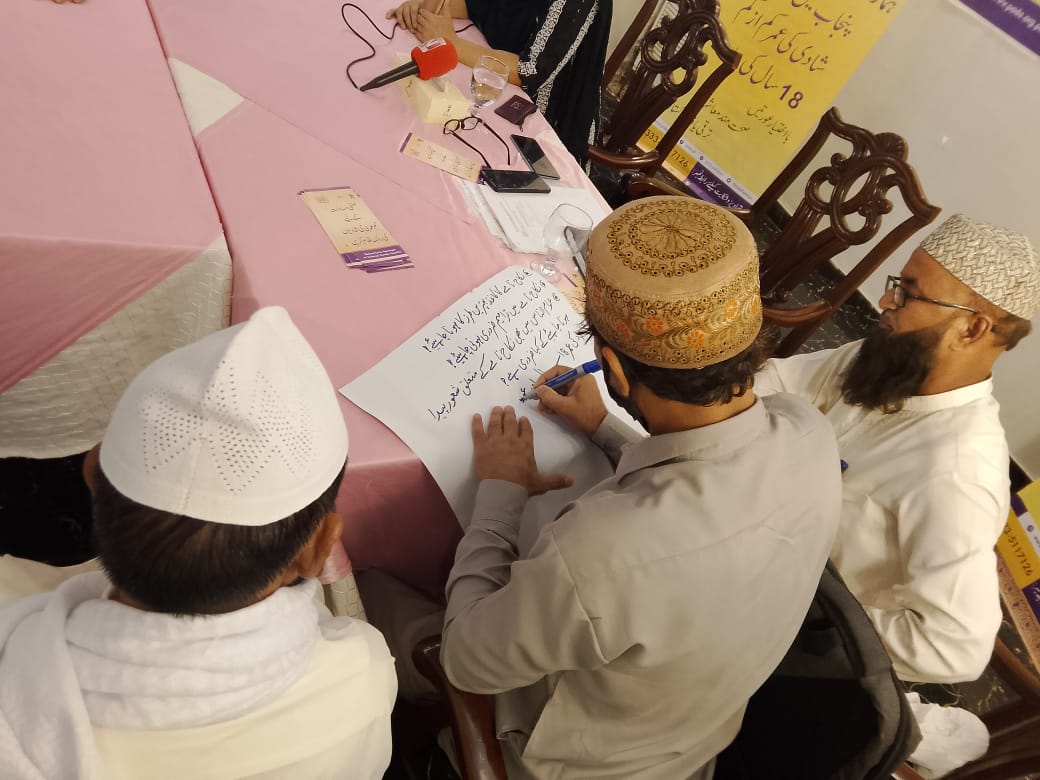
The session concluded with a discussion on legal penalties for violating child marriage laws, followed by group work and a certificate distribution ceremony. The participants appreciated PODA’s initiative, describing the training as both timely and essential for protecting children’s rights and strengthening legal practice at the community level.