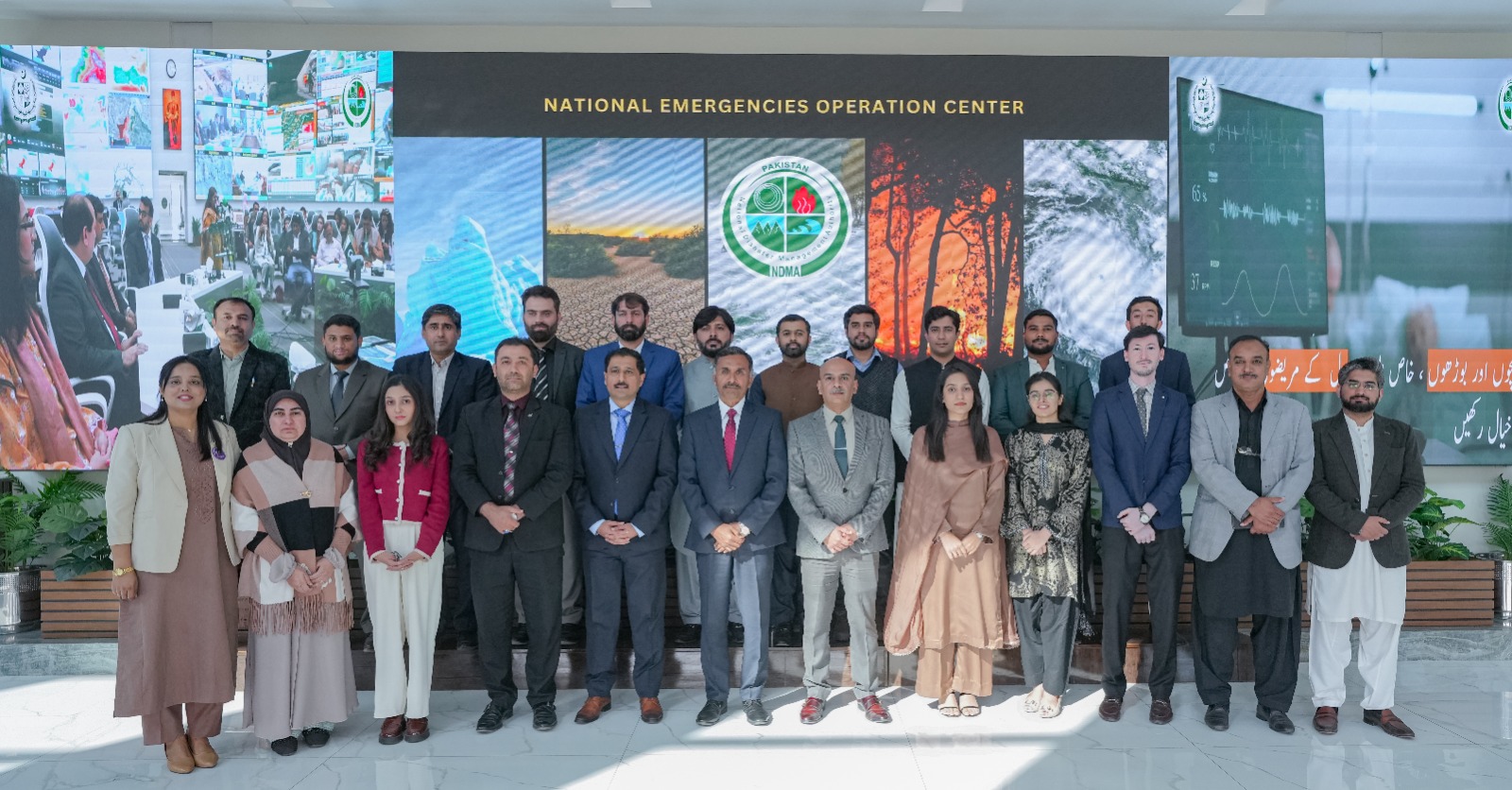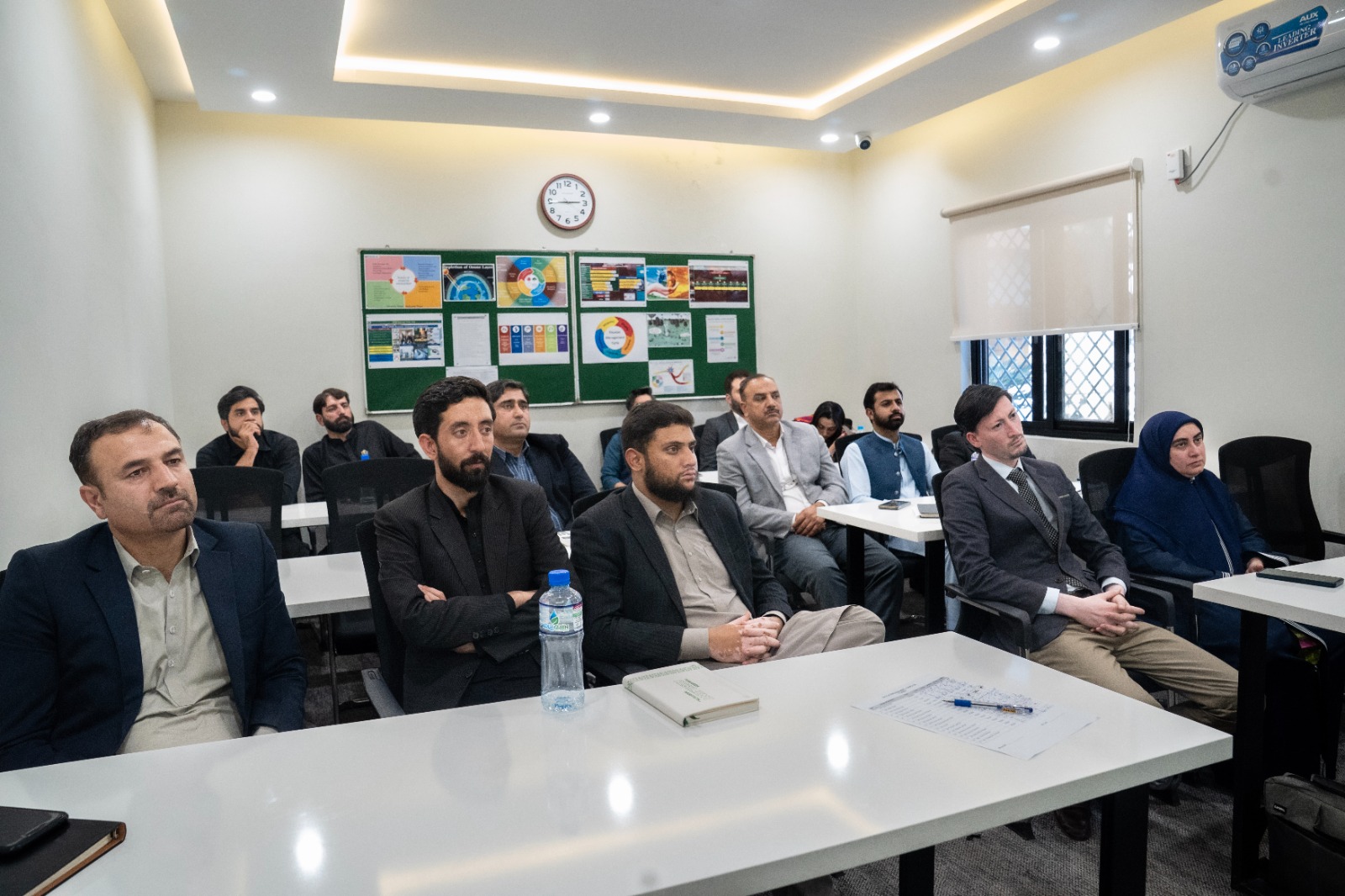
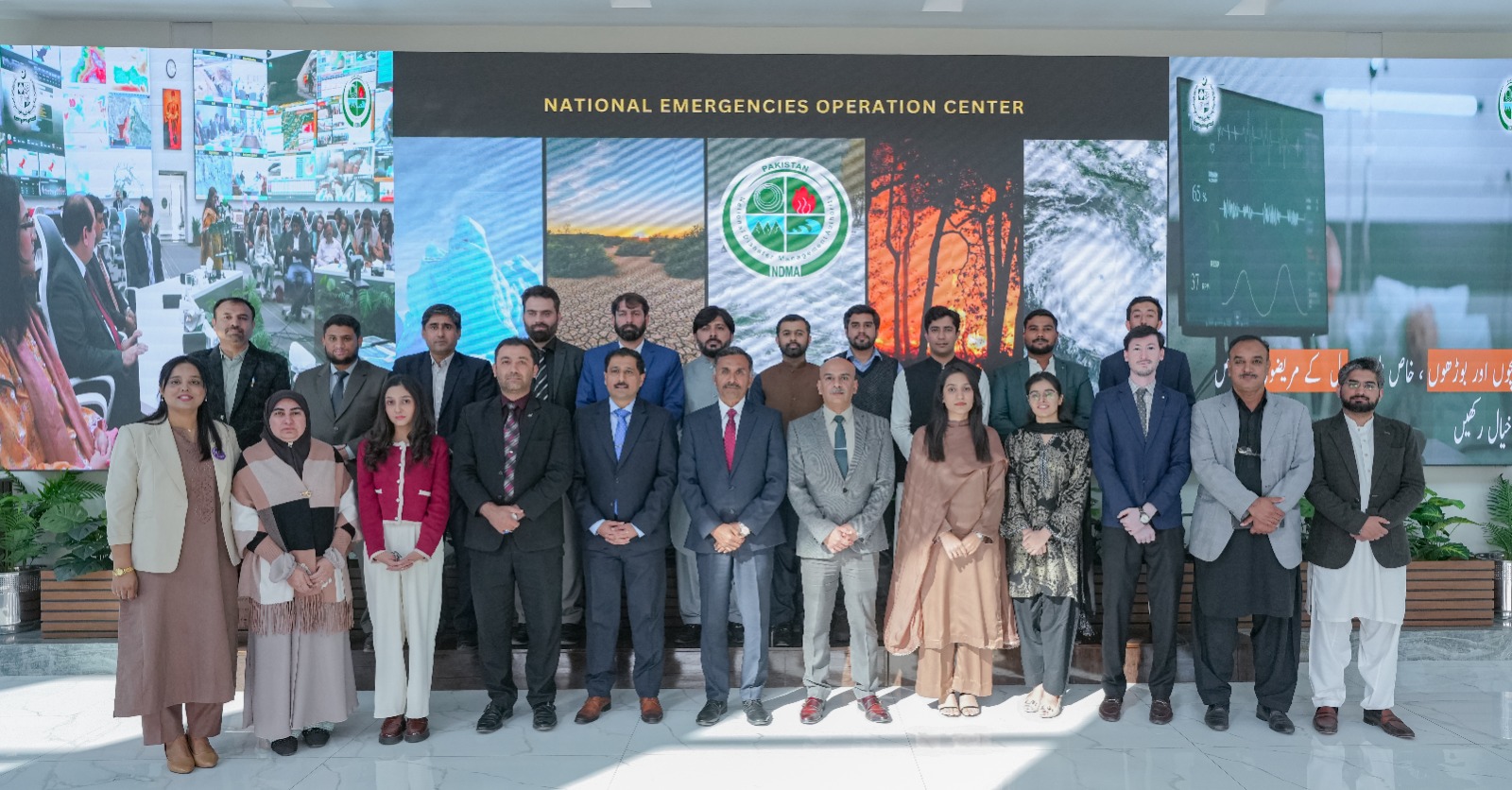
15-Day Capacity Development Training on climate Change and Disaster Management at NDMA, Islamabad.
Monday, 17th November 2025, Islamabad: PODA staff successfully completed the 15-Day Capacity Training on climate Change and Disaster Management at the National Emergency Operations Center (NEOC), National Disaster Management Authority (NDMA), held from 27 October to 14 November 2025.
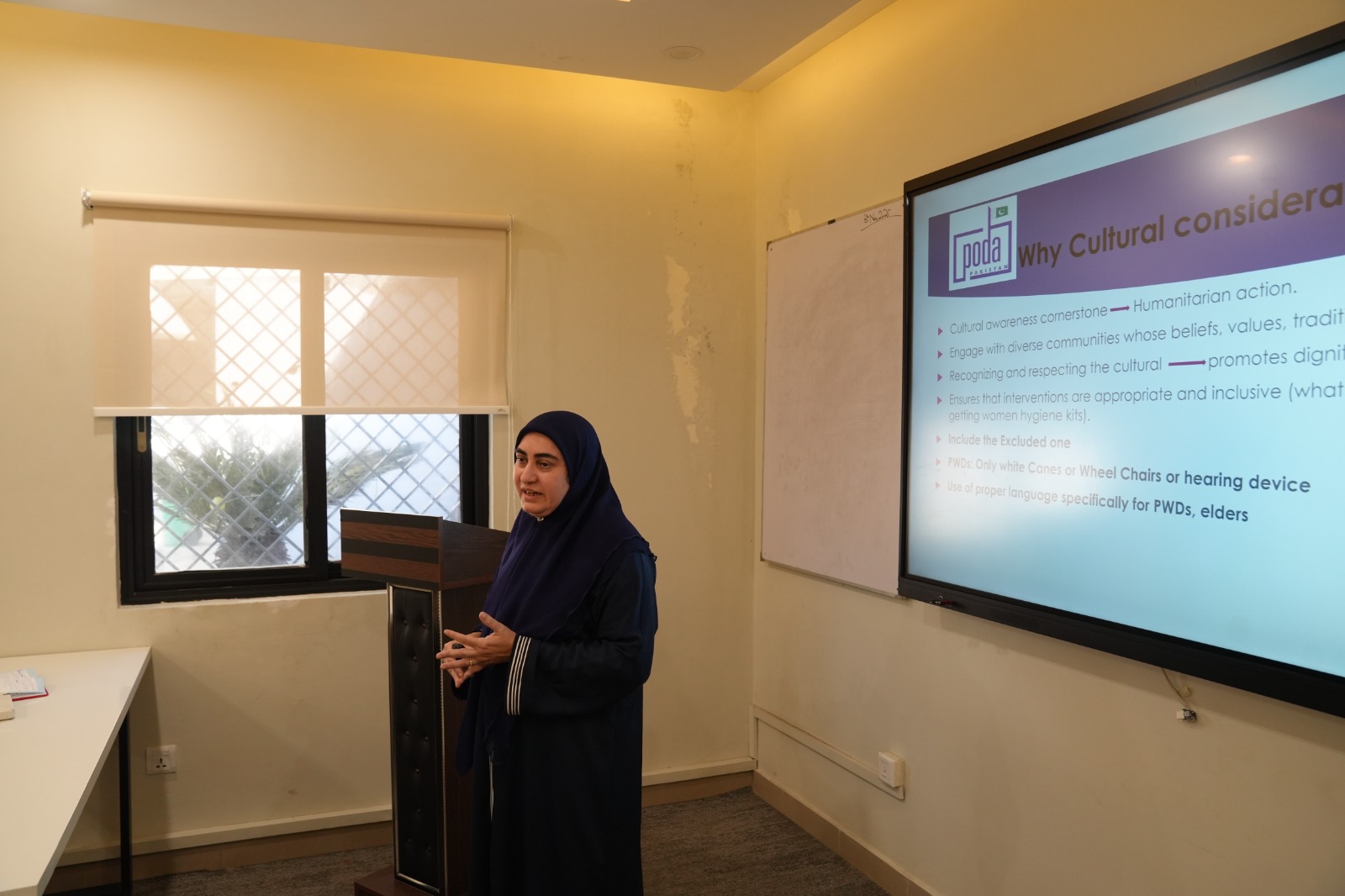
The comprehensive program was designed to strengthen the knowledge and technical capacity of professionals engaged in disaster management, humanitarian coordination, and community resilience. During the training, PODA staff shared insights from the organization’s community-centered initiatives, including humanitarian response, climate education, women’s leadership programs, and field experiences that support disaster preparedness and resilience building. One presentation by PODA staff focused on cultural considerations in humanitarian response, emphasizing that understanding local customs, beliefs, and community dynamics is essential for delivering effective, respectful, and inclusive support. The presentation highlighted PODA’s work in Pakistan, demonstrating how culturally informed approaches helped address the needs of flood-affected families in a way that strengthened trust and improved the impact of assistance.
The training covered a wide range of technical and strategic sessions delivered by senior experts from NDMA and NIDM. Key areas of learning included:
- NDMA’s institutional structure and functions, national disaster response mechanisms, and coordination frameworks.
- Disaster Risk Reduction (DRR) concepts, Pakistan’s hazard profile, global DRR frameworks, anticipatory action, and community-based approaches.
- Operational preparedness, including Search & Rescue, Rapid Need Assessment, simulation exercises and emergency response planning.
- Technical training on the use of emerging technologies in disaster management such as remote sensing, GIS applications, importance of metadata and image processing.
- Risk communication and media management, covering community engagement strategies, multi-channel communication, crisis narratives, and behavioral insights during emergencies.
- Climate change and infrastructure resilience, along with linkages to national and international climate policies.
- Hands-on technical lab sessions and exposure visit to SUPARCO Headquarter, providing practical exposure to advanced technologies and national disaster management systems.
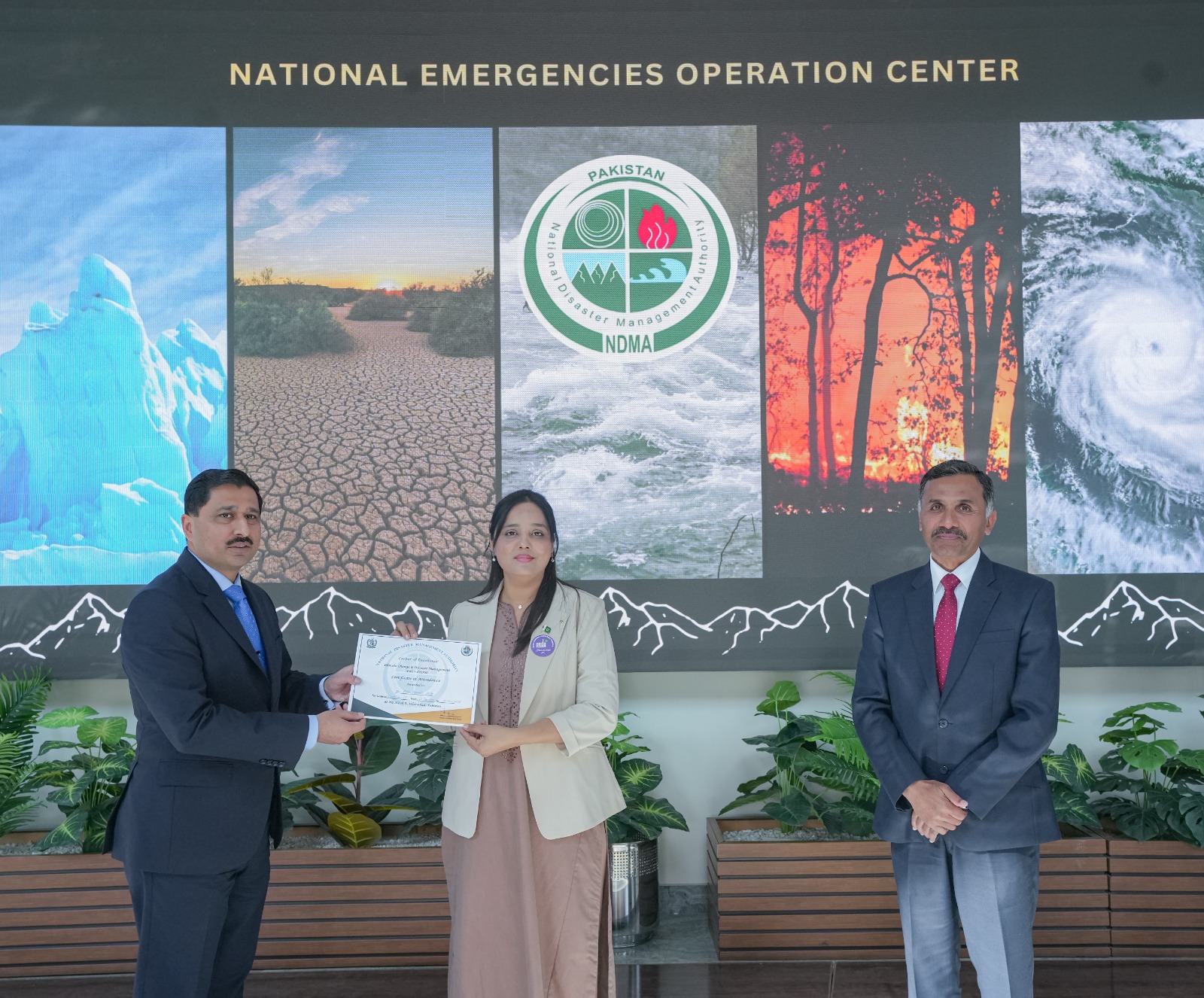
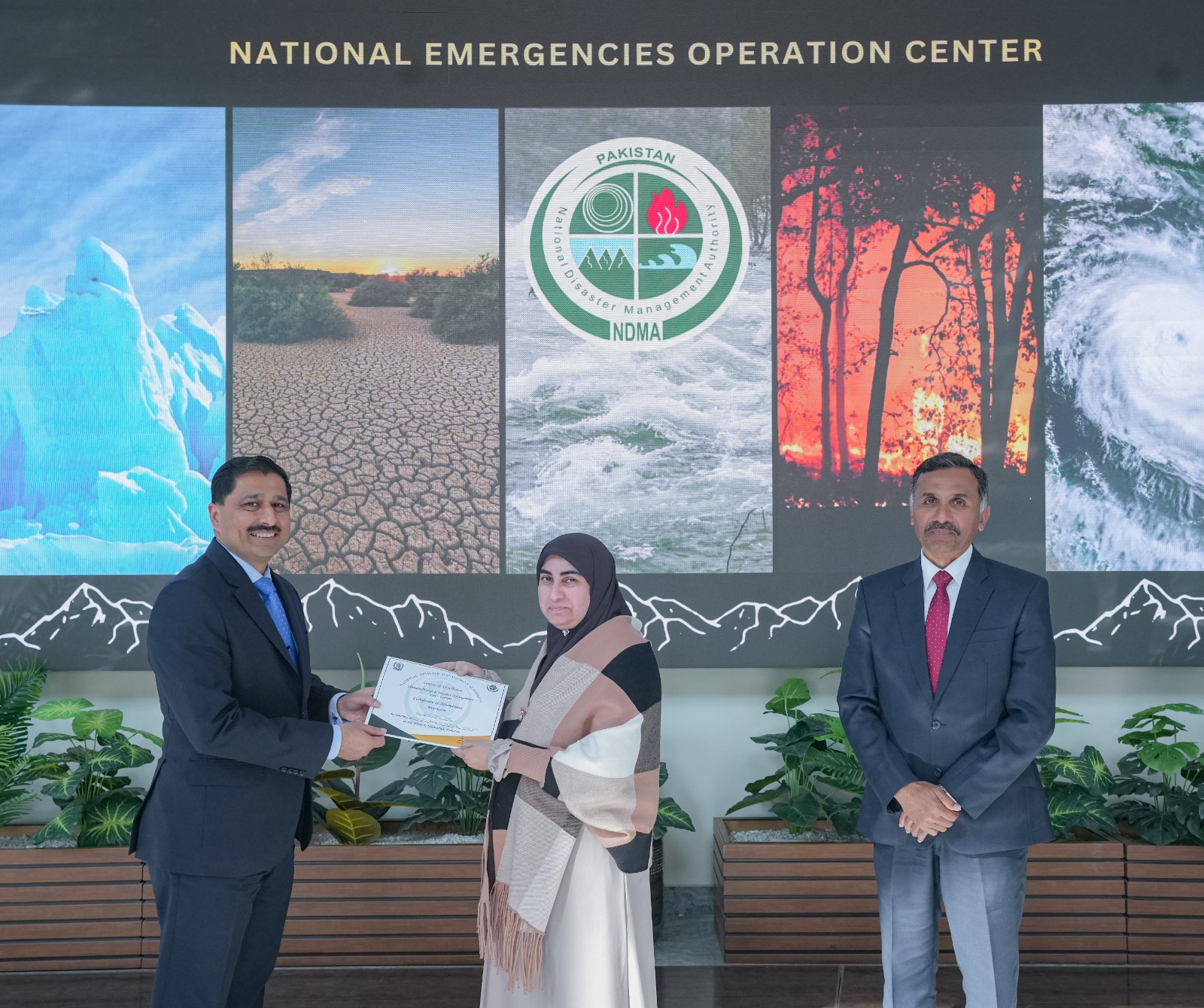
At the end of the course certificates were distributed among participants.